Online vs. In-Person Learning: 2026 US Education Analysis
Anúncios
The ongoing debate surrounding Examining the Effectiveness of Online vs. In-Person Learning: A 2026 US Education Analysis reveals critical insights into pedagogical shifts. This comprehensive report, drawing from recent data, underscores the nuanced advantages and disadvantages inherent in each educational model. Stakeholders are now evaluating these findings to shape future policy and institutional strategies nationwide.
The landscape of American education is undergoing a profound transformation, with the central question of Examining the Effectiveness of Online vs. In-Person Learning: A 2026 US Education Analysis at its forefront. As 2026 unfolds, new data and technological advancements are continually reshaping our understanding of how students learn best. This analysis delves into the core components of both modalities, scrutinizing their impact on academic outcomes, student well-being, and equitable access across the United States.
Stakeholders, from policymakers to parents and educators, are keenly observing these developments. The insights gleaned from a thorough Examining the Effectiveness of Online vs. In-Person Learning: A 2026 US Education Analysis are crucial for making informed decisions. This article will explore the latest trends, the evolving challenges, and the innovative solutions emerging in this dynamic educational environment, providing a clear picture of what lies ahead.
Anúncios
Understanding the Current Educational Landscape in 2026
As we navigate 2026, the educational landscape in the United States continues to evolve at an unprecedented pace. The shift towards integrating technology into learning, accelerated by recent global events, has solidified the presence of both online and in-person instruction.
This ongoing evolution necessitates a diligent Examining the Effectiveness of Online vs. In-Person Learning: A 2026 US Education Analysis to understand the long-term implications. Educators and institutions are actively adapting their methodologies to meet diverse student needs, while simultaneously grappling with resource allocation and technological infrastructure.
Anúncios
The data emerging from various educational institutions provides a clearer picture of student engagement and academic performance across different learning environments. This granular information is vital for policymakers striving to create more resilient and effective educational systems for the future.
Academic Performance: Online vs. In-Person Metrics
A significant focus of any comprehensive Examining the Effectiveness of Online vs. In-Person Learning: A 2026 US Education Analysis is the direct comparison of academic performance. Recent studies indicate varying outcomes depending on the subject matter, student demographics, and the quality of instructional design.
For instance, certain STEM fields might benefit from hands-on laboratory experiences unique to in-person settings, while humanities courses could thrive in the flexible, resource-rich environment of online platforms. The effectiveness often hinges on a student’s self-discipline and access to necessary resources.
Data from the National Center for Education Statistics (NCES) for 2025-2026 suggests a slight edge for in-person learning in foundational subjects for younger students, though this gap narrows considerably at higher education levels. This nuanced perspective is essential when Examining the Effectiveness of Online vs. In-Person Learning: A 2026 US Education Analysis.
Higher Education Outcomes
In higher education, the distinction between online and in-person learning often blurs, with many institutions adopting hybrid models. Online programs have proven particularly effective for adult learners and those seeking specialized certifications.
Graduation rates and post-graduation employment statistics are key indicators being tracked. Universities are continuously refining their online offerings to match the rigor and quality of traditional campus experiences, a critical factor in Examining the Effectiveness of Online vs. In-Person Learning: A 2026 US Education Analysis.
The flexibility of online learning at the collegiate level often translates into increased access and completion for students who might otherwise face geographical or scheduling barriers. This accessibility is a major component of its perceived effectiveness.
K-12 Performance Discrepancies
At the K-12 level, the debate of online vs in-person learning remains more contentious. Early elementary students, in particular, often require the structured environment and social interaction that in-person classrooms provide for optimal development.
However, advancements in interactive online platforms and personalized learning tools are beginning to address some of these challenges, offering tailored experiences. The role of parental involvement also plays a more pronounced role in the success of K-12 online education.
Districts are experimenting with various blended models to harness the benefits of both approaches. This ongoing experimentation is a vital part of the broader Examining the Effectiveness of Online vs. In-Person Learning: A 2026 US Education Analysis, providing real-world data points.
Student Well-being and Engagement
Beyond academic metrics, student well-being and engagement are paramount when Examining the Effectiveness of Online vs. In-Person Learning: A 2026 US Education Analysis. The social and emotional development of students can be significantly impacted by their learning environment.
In-person settings naturally foster peer interaction, collaborative learning, and direct mentorship from educators, which are crucial for developing social skills and a sense of community. These elements are often more challenging to replicate in purely virtual environments.
Conversely, some students thrive in the self-paced, less distracting environment that online learning can offer, especially those with certain learning styles or social anxieties. Understanding these diverse needs is central to a balanced Examining the Effectiveness of Online vs. In-Person Learning: A 2026 US Education Analysis.
Social and Emotional Development
The social component of in-person schooling extends beyond academics, contributing significantly to a student’s emotional intelligence and interpersonal skills. Playground interactions, group projects, and extracurricular activities are vital for holistic development.
While online platforms have introduced virtual collaboration tools and discussion forums, the depth of connection can differ. Educators are exploring innovative ways to foster a strong sense of community and belonging in remote settings, an important aspect of online vs in-person learning.
Addressing potential feelings of isolation in online learners is a key priority for educational psychologists and program designers. Support systems and regular check-ins are becoming standard practice to ensure student well-being.
Engagement and Motivation Drivers
Student engagement can fluctuate significantly between online and in-person modalities. In-person classrooms often benefit from immediate feedback, dynamic group activities, and the physical presence of an instructor, which can sustain motivation.
Online learning, however, can leverage multimedia content, gamification, and personalized learning paths to keep students engaged. The key lies in designing interactive and stimulating online experiences that prevent passive consumption of material.
A successful Examining the Effectiveness of Online vs. In-Person Learning: A 2026 US Education Analysis must consider the diverse factors that drive student motivation, adapting strategies to each specific learning environment. This includes teacher training in digital pedagogy and student self-regulation skills.
Technological Integration and Infrastructure
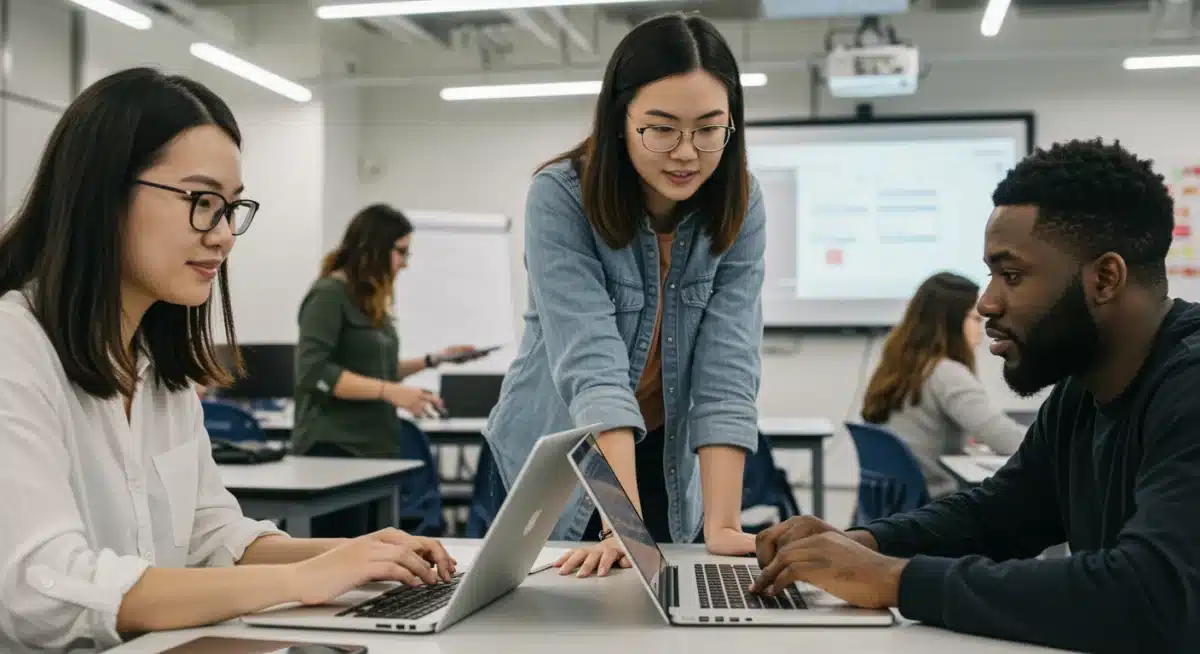
The success of online learning is inextricably linked to robust technological integration and infrastructure. A significant part of Examining the Effectiveness of Online vs. In-Person Learning: A 2026 US Education Analysis involves assessing the digital divide and access to reliable internet and devices.
While urban and suburban areas often boast superior connectivity, rural communities continue to face challenges, impacting equitable access to online educational resources. This disparity remains a critical barrier to fully realizing the potential of remote instruction.
Investment in digital infrastructure and providing devices to students are ongoing priorities for federal and state governments. These efforts are crucial for leveling the playing field and ensuring that all students can participate effectively in modern learning environments, whether online or in-person.
Bridging the Digital Divide
Efforts to bridge the digital divide are intensifying in 2026, with initiatives aimed at providing low-cost internet and devices to underserved populations. Public libraries and community centers are also playing a vital role as access points.
However, the challenge extends beyond mere access; it also includes digital literacy for both students and educators. Comprehensive training programs are essential to maximize the utility of educational technology, impacting the overall success of online vs in-person learning.
Policymakers are exploring innovative public-private partnerships to accelerate these initiatives. The goal is to ensure that technological limitations do not hinder educational opportunities, a core tenet of educational equity.
Innovation in Learning Platforms
The innovation in learning platforms continues to advance rapidly, offering increasingly sophisticated tools for online instruction. Artificial intelligence (AI) is being integrated to personalize learning paths, provide automated feedback, and identify students who might need additional support.
Virtual reality (VR) and augmented reality (AR) are also emerging as powerful tools, creating immersive learning experiences that can simulate field trips or complex scientific experiments. These technologies are transforming the possibilities for both online and in-person instruction.
The continuous evolution of these platforms will undoubtedly influence future findings when Examining the Effectiveness of Online vs. In-Person Learning: A 2026 US Education Analysis. Their ability to adapt and engage diverse learners is a key metric of their success.
Teacher Training and Support
The effectiveness of any educational model, be it online or in-person, heavily relies on the preparedness and ongoing support provided to educators. A thorough Examining the Effectiveness of Online vs. In-Person Learning: A 2026 US Education Analysis must include a critical look at teacher training programs.
Many educators, particularly those trained in traditional settings, required significant professional development to adapt to online teaching methodologies during the rapid shift to remote learning. This need for continuous upskilling remains a priority.
Institutions are investing in specialized training for digital pedagogy, instructional design for virtual environments, and strategies for maintaining student engagement in hybrid models. Adequate support ensures that teachers can effectively leverage the tools at their disposal.
Adapting Pedagogy for Digital Environments
Adapting pedagogical approaches for digital environments requires a fundamental shift from traditional classroom methods. This includes mastering virtual classroom management, designing interactive online assignments, and utilizing data analytics to track student progress.
Effective online teaching emphasizes asynchronous learning opportunities combined with synchronous sessions, allowing for flexibility while maintaining direct interaction. This blended approach is becoming a hallmark of successful online vs in-person learning strategies.
Ongoing workshops and peer-to-peer learning communities are critical for sharing best practices and addressing challenges specific to online instruction. This collaborative spirit enhances the overall quality of remote education.
Support Systems for Educators
Beyond initial training, robust support systems are essential for educators. This includes technical assistance, access to instructional designers, and mental health resources to mitigate burnout often associated with adapting to new teaching paradigms.
Mentorship programs, where experienced online educators guide their less experienced colleagues, are proving highly effective. These systems contribute significantly to teacher retention and overall job satisfaction, directly impacting student learning outcomes.
When Examining the Effectiveness of Online vs. In-Person Learning: A 2026 US Education Analysis, the quality of teacher support is a non-negotiable factor. Well-supported teachers are better equipped to deliver high-quality instruction regardless of the modality.
Policy Implications and Future Trends
The findings from Examining the Effectiveness of Online vs. In-Person Learning: A 2026 US Education Analysis are directly influencing educational policy across the United States. States are reviewing everything from accreditation standards to funding models for virtual schools and hybrid programs.
There’s a growing recognition that future educational policies must be flexible and adaptable, capable of supporting diverse learning modalities. This includes addressing issues of equity, student data privacy, and the standardization of online curriculum quality.
The trend towards personalized learning, often facilitated by technology, is also shaping policy discussions. This allows for tailored educational experiences that can cater to individual student needs and learning paces, regardless of whether they are in an online or in-person setting.
Accreditation and Quality Assurance
Accreditation bodies are updating their standards to ensure the quality and rigor of online programs, particularly in K-12 education. This is crucial for maintaining public trust and ensuring that online credentials hold the same value as traditional ones.
States are implementing stricter guidelines for virtual schools, focusing on student outcomes, teacher qualifications, and comprehensive support services. These measures are designed to elevate the overall standard of online vs in-person learning.
The continuous evaluation of these standards will be a key aspect of future policy decisions. Ensuring quality assurance across all educational formats is paramount for the integrity of the US education system.
Funding Models for Hybrid Education
Funding models are being re-evaluated to accommodate the increasing prevalence of hybrid and fully online learning environments. Traditional per-pupil funding often doesn’t fully account for the unique costs associated with digital infrastructure, software licenses, and specialized online teacher training.
Legislators are exploring new formulas that equitably distribute resources, recognizing that effective online education requires significant investment. This financial recalibration is a complex but necessary step in supporting the evolving educational landscape.
The long-term sustainability of various educational models depends heavily on these revised funding strategies. A robust Examining the Effectiveness of Online vs. In-Person Learning: A 2026 US Education Analysis will undoubtedly highlight these financial considerations.
Parental Involvement and Community Engagement

The role of parental involvement and broader community engagement has proven to be a critical determinant of success, particularly when Examining the Effectiveness of Online vs. In-Person Learning: A 2026 US Education Analysis. For younger students in online settings, active parental support is often indispensable.
Parents frequently serve as facilitators, ensuring children stay on task, navigate online platforms, and have a conducive learning environment at home. This level of involvement can significantly impact a student’s academic progress and emotional well-being.
For in-person learning, community engagement, through parent-teacher associations, local partnerships, and volunteer programs, enriches the educational experience. Both modalities benefit from strong home-school connections, albeit in different ways.
Supporting Online Learners at Home
Supporting online learners at home requires parents to take on new roles, often balancing their own responsibilities with educational oversight. Schools are developing resources and workshops to equip parents with the necessary tools and strategies.
Clear communication channels between teachers and parents are more vital than ever in online learning. Regular updates on student progress and access to technical support can alleviate parental stress and enhance the learning experience.
The varying levels of parental capacity and resources highlight existing inequities, making it a crucial consideration in any Examining the Effectiveness of Online vs. In-Person Learning: A 2026 US Education Analysis. Addressing these disparities is essential for equitable outcomes.
Community’s Role in Education
The broader community plays a significant role in supporting both online and in-person education. Local businesses, non-profits, and civic organizations can provide resources, mentorship, and real-world learning opportunities.
For in-person schools, community partnerships can lead to enhanced facilities, extracurricular programs, and career exploration opportunities. In online models, community centers can offer supervised study spaces and access to technology.
Fostering these connections is increasingly recognized as a vital component of a holistic educational ecosystem. This collaborative approach enhances the overall effectiveness of education, whether it’s online vs in-person learning.
Challenges and Opportunities in 2026
As we continue Examining the Effectiveness of Online vs. In-Person Learning: A 2026 US Education Analysis, numerous challenges and opportunities emerge. The primary challenge remains ensuring equitable access and high-quality instruction for all students, regardless of their socioeconomic background or geographic location.
The rapid pace of technological change also presents a dual challenge: keeping educational content current and ensuring educators are proficient in utilizing new tools. However, these challenges also open doors for significant innovation in teaching and learning.
Opportunities abound for personalized learning, expanded access to specialized courses, and developing critical digital literacy skills among students. The key is to strategically leverage these opportunities to build a more robust and adaptable educational system.
Addressing Equity Gaps
Equity gaps, particularly exacerbated by the digital divide, remain a significant hurdle. Efforts to provide devices, internet access, and digital literacy training are ongoing but require sustained investment and policy focus.
Ensuring that online learning environments are accessible to students with disabilities is another critical equity consideration. Universal design for learning principles must be consistently applied across all educational platforms.
A successful Examining the Effectiveness of Online vs. In-Person Learning: A 2026 US Education Analysis must explicitly address how these equity gaps are being tackled and what further interventions are needed to achieve true educational equality.
Innovation in Pedagogical Approaches
The challenges of recent years have spurred unprecedented innovation in pedagogical approaches. Educators are experimenting with blended learning models, project-based learning in virtual settings, and flipped classrooms that maximize interactive time.
The integration of AI for adaptive assessments and personalized feedback is transforming how students interact with content. These innovations are not confined to online spaces; they are increasingly enriching in-person classrooms as well.
This continuous experimentation and refinement of teaching methods is a major opportunity. It ensures that education remains dynamic and responsive to the needs of 21st-century learners, enhancing the effectiveness of both online vs in-person learning.
The Hybrid Future of US Education
The prevailing sentiment from Examining the Effectiveness of Online vs. In-Person Learning: A 2026 US Education Analysis points towards a hybrid future for US education. It is increasingly clear that neither online nor in-person learning will fully supplant the other.
Instead, institutions are likely to adopt flexible models that strategically integrate the strengths of both modalities. This could mean a blend of synchronous online sessions with in-person lab work, or traditional classroom instruction supplemented by rich digital resources.
Such hybrid models offer the best of both worlds: the flexibility and accessibility of online learning combined with the social interaction and hands-on experiences of in-person environments. This adaptive approach promises a more resilient and inclusive educational system.
Blended Learning Models
Blended learning models are gaining traction as a pragmatic solution, allowing educators to tailor instruction to specific learning objectives and student needs. These models leverage technology to enhance traditional classroom teaching, rather than replace it.
For example, students might engage with lectures and foundational content online at their own pace, reserving in-person class time for discussions, problem-solving, and collaborative projects. This maximizes the efficiency and impact of contact hours.
The ongoing development and refinement of these models will be a key area of focus. Their success will be a critical factor in the continuing Examining the Effectiveness of Online vs. In-Person Learning: A 2026 US Education Analysis, demonstrating adaptability and innovation.
Flexibility and Adaptability
The future of education demands flexibility and adaptability from institutions, educators, and students alike. The ability to seamlessly transition between learning modalities in response to unforeseen circumstances or evolving needs is paramount.
This means investing in versatile technological tools, cross-training educators in both online and in-person pedagogies, and fostering an institutional culture that embraces change. Such adaptability ensures educational continuity and resilience.
The insights from Examining the Effectiveness of Online vs. In-Person Learning: A 2026 US Education Analysis highlight that a rigid adherence to one model over the other is no longer sustainable. A flexible, student-centric approach is the path forward.
| Key Finding | Brief Description |
|---|---|
| Academic Outcomes | Varied by subject and student, with K-12 favoring in-person for foundational skills. |
| Student Well-being | In-person fosters social skills; online offers flexibility for some. |
| Tech & Infrastructure | Digital divide persists; AI/VR enhancing online learning experiences. |
| Future Outlook | Hybrid models likely to dominate, combining strengths of both modalities. |
Frequently Asked Questions About Online vs. In-Person Learning
A 2026 analysis indicates that in-person learning often provides a slight advantage for K-12 students in foundational subjects due to direct interaction and structured environments. However, higher education shows more parity, with online platforms excelling in flexibility and specialized studies, especially for self-motivated learners.
In-person learning generally promotes stronger social-emotional development through peer interaction and direct mentorship. Online learning can offer comfort for some students, but requires proactive strategies to mitigate isolation and foster community. Both models need intentional design to support student mental health effectively.
Technology is crucial for online learning’s effectiveness, with advancements in AI, VR, and interactive platforms creating more engaging experiences. However, the digital divide remains a significant barrier, impacting equitable access to devices and reliable internet, which is a key focus of the 2026 US education analysis.
Teacher training is a critical factor. While institutions are investing more in digital pedagogy and hybrid teaching strategies, continuous professional development is essential. Effective support systems for educators, including technical assistance and instructional design resources, are vital for ensuring high-quality instruction across all modalities.
The future of US education is largely hybrid, blending the strengths of online flexibility with in-person social and hands-on experiences. Policy adjustments will focus on accreditation, equitable funding, and leveraging technology for personalized learning. This adaptive approach aims to create a more resilient and inclusive educational system.
Looking Ahead: The Evolving Educational Landscape
The comprehensive Examining the Effectiveness of Online vs. In-Person Learning: A 2026 US Education Analysis underscores a pivotal moment for US education. The insights gained are not merely academic observations; they are actionable intelligence for shaping future policies and pedagogical practices. As technology continues its relentless march forward, and societal needs evolve, the dialogue surrounding online vs in-person learning will remain dynamic.
What emerges is a clear imperative for flexibility and innovation. Institutions that successfully integrate the best elements of both online and in-person instruction, while addressing equity and student well-being, will be the ones that thrive. The ongoing commitment to research, teacher support, and responsive policy will determine the ultimate success of this transformative period in American education.