AI in Financial Advisory: What to Expect by 2026
Anúncios
Latest developments on The Rise of AI in Financial Advisory Services: What to Expect by 2026, with key facts, verified sources and what readers need to monitor next in Estados Unidos, presented clearly in Inglês (Estados Unidos) (en-US).
The Rise of AI in Financial Advisory Services: What to Expect by 2026 is shaping today’s agenda with new details released by officials and industry sources. This update prioritizes what changed, why it matters and what to watch next, in a straightforward news format.
The financial sector stands on the precipice of a profound transformation, driven largely by advancements in artificial intelligence. As 2026 approaches, the integration of AI is not merely an enhancement but a fundamental reshaping of how financial advice is delivered and consumed.
This shift promises increased efficiency, personalized client experiences, and broader accessibility to sophisticated financial planning. Understanding these impending changes is crucial for both industry professionals and consumers alike.
The implications extend beyond operational improvements, touching on regulatory frameworks, ethical considerations, and the very nature of human-advisor relationships. Preparing for this future requires foresight and adaptability.
Anúncios
The Evolving Landscape of AI in Financial Advisory
The integration of artificial intelligence into financial advisory services is accelerating at an unprecedented pace, fundamentally altering traditional models. This evolution is driven by the need for greater efficiency, precision, and personalization in financial planning and wealth management.
By 2026, AI technologies are expected to move beyond simple automation, becoming integral to complex decision-making processes and predictive analytics. This will empower advisors with deeper insights and clients with more tailored strategies.
The current trajectory indicates a future where AI will not replace human advisors but rather augment their capabilities, allowing them to focus on high-value tasks and client relationships. This collaborative model is central to understanding the impact of AI Financial Advisory 2026.
Enhanced Personalization and Predictive Analytics
AI algorithms are becoming exceptionally adept at analyzing vast datasets, including individual spending habits, risk tolerance, and long-term financial goals. This capability allows for the creation of highly personalized financial plans that adapt dynamically to changing market conditions and personal circumstances.
Predictive analytics, powered by machine learning, will enable advisors to anticipate market shifts and client needs with greater accuracy than ever before. This proactive approach will be a hallmark of AI Financial Advisory 2026, offering a significant competitive advantage.
Clients will benefit from advice that feels truly bespoke, moving away from generic recommendations towards strategies meticulously crafted for their unique financial journey. This level of customization fosters stronger trust and better financial outcomes.

Operational Efficiency and Cost Reduction
AI-driven automation is already streamlining numerous back-office operations, from data entry and compliance checks to report generation. By 2026, these efficiencies will be even more pronounced, significantly reducing operational costs for financial institutions.
Anúncios
The reduction in manual tasks frees up human advisors to concentrate on strategic planning, client engagement, and complex problem-solving. This reallocation of resources optimizes the overall service delivery model.
Furthermore, AI’s ability to process and reconcile data quickly minimizes errors, enhancing the accuracy and reliability of financial services. This contributes to a more robust and trustworthy advisory ecosystem.
Transforming Client Engagement and Accessibility
AI is set to revolutionize how financial advisors interact with their clients, making services more accessible and engaging. Chatbots and virtual assistants, powered by natural language processing (NLP), will provide instant support and answer common queries, available 24/7.
This increased accessibility means that financial advice will no longer be limited to traditional office hours, catering to a diverse clientele with varying schedules and needs. It democratizes access to expert guidance, fostering financial literacy across broader demographics.
The seamless integration of AI tools will create a more fluid and intuitive client experience, allowing individuals to manage their finances with unprecedented ease and confidence. This is a critical aspect of AI Financial Advisory 2026.
The Role of Robo-Advisors and Hybrid Models
Robo-advisors, once viewed as a niche service, are rapidly gaining sophistication and market share. By 2026, these automated platforms will offer more complex portfolio management and financial planning capabilities, often at a lower cost.
The hybrid model, combining the efficiency of robo-advisors with the nuanced judgment of human financial professionals, is emerging as a dominant trend. This approach leverages the best of both worlds, providing scalable solutions with a human touch.
For many clients, particularly those with less complex financial situations or those just starting their investment journey, robo-advisors offer an entry point to professional financial guidance. This expansion of access is a key driver for AI Financial Advisory 2026.
Data Security and Ethical Considerations
As AI systems become more deeply embedded in financial advisory, the importance of robust data security measures becomes paramount. Protecting sensitive client information from cyber threats is a non-negotiable imperative for all institutions.
Ethical considerations surrounding AI are also gaining prominence, particularly regarding algorithmic bias and transparency. Ensuring that AI recommendations are fair, unbiased, and explainable is crucial for maintaining client trust and regulatory compliance.
Financial firms must invest in advanced cybersecurity protocols and develop clear ethical guidelines for AI deployment. This proactive approach will safeguard both client data and the integrity of the advisory process.

Regulatory Landscape and Compliance Challenges
The rapid advancement of AI in financial advisory services presents significant challenges for regulators tasked with ensuring consumer protection and market stability. Existing regulations often lag behind technological innovation, necessitating new frameworks.
Regulators are grappling with how to oversee AI algorithms, particularly concerning transparency, accountability, and potential biases in financial recommendations. The goal is to foster innovation while mitigating risks effectively.
By 2026, we anticipate a more defined regulatory environment, with clear guidelines for AI deployment, data privacy, and ethical use within the financial sector. Compliance will be a major focus for firms adopting AI Financial Advisory 2026.
Adapting to New Compliance Requirements
Financial institutions utilizing AI will need to implement sophisticated compliance systems capable of monitoring algorithmic decisions and ensuring adherence to evolving regulations. This includes robust auditing trails and explainable AI models.
Training staff on new compliance protocols related to AI will be essential to avoid penalties and maintain public trust. The human element in overseeing AI systems remains critical, even as automation increases.
The proactive engagement between industry players and regulatory bodies will be crucial in shaping effective and practical compliance standards that support the responsible growth of AI Financial Advisory 2026.
Mitigating Algorithmic Bias and Ensuring Fairness
One of the most pressing ethical challenges is the potential for algorithmic bias, where AI systems might inadvertently discriminate based on historical data. This can lead to unfair or inequitable financial advice for certain demographic groups.
Developing and deploying AI models that are rigorously tested for bias and designed for fairness is a critical responsibility for financial firms. Transparency in how algorithms arrive at their recommendations will build confidence.
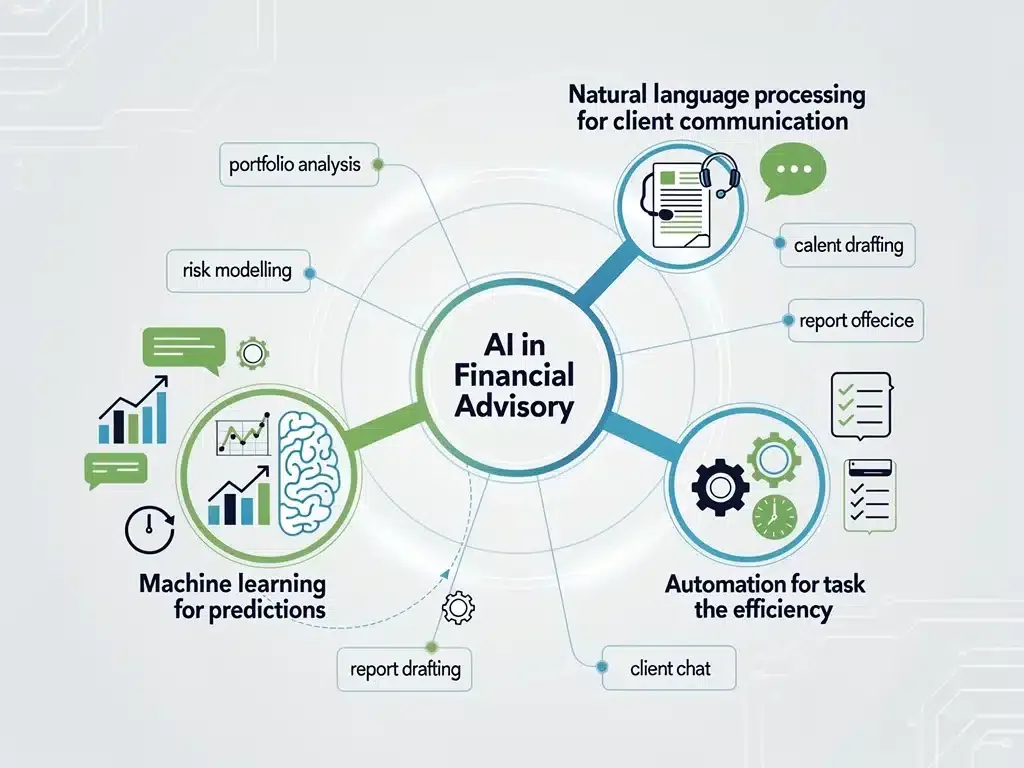
Ongoing monitoring and regular audits of AI systems will be necessary to detect and correct any emerging biases, ensuring that AI-driven financial advice is equitable for all clients. This commitment to fairness is central to the ethical implementation of AI Financial Advisory 2026.
Impact on Human Financial Advisors
The rise of AI in financial advisory services does not signal the obsolescence of human advisors; rather, it heralds a transformation of their roles. Advisors will increasingly shift from routine data processing to more strategic, empathetic, and complex problem-solving tasks.
AI tools will serve as powerful co-pilots, handling data analysis, market research, and portfolio optimization, thereby freeing up advisors to focus on relationship building, psychological counseling, and nuanced financial strategy.
This evolution demands a new skill set for advisors, emphasizing emotional intelligence, communication, and technological proficiency. The future of AI Financial Advisory 2026 is one of collaboration, not replacement.
Upskilling and Reskilling for the AI Era
For financial advisors to thrive in an AI-dominated landscape, continuous learning and adaptation are imperative. Upskilling in areas like data interpretation, AI tool utilization, and advanced financial modeling will become standard.
Reskilling initiatives will prepare advisors for new roles centered on client psychology, behavioral finance, and navigating complex ethical dilemmas that AI alone cannot address. This proactive approach ensures career longevity.
Institutions must invest heavily in training programs that equip their human capital with the necessary competencies to leverage AI effectively, transforming them into augmented advisors rather than redundant ones. This is a key investment for AI Financial Advisory 2026.
Strengthening Client Relationships Through AI
Paradoxically, AI can enhance the human element of financial advisory. By automating mundane tasks, advisors gain more time to engage with clients on a deeper, more personal level, addressing their fears, aspirations, and life changes.
AI-driven insights can also help advisors understand client needs more profoundly, leading to more empathetic and relevant conversations. This allows for a proactive approach to client care, anticipating needs before they are explicitly stated.
The combination of AI efficiency and human empathy will forge stronger, more resilient client relationships, leading to increased loyalty and trust. This synergy defines the advanced client experience in AI Financial Advisory 2026.
Investment Opportunities and Market Dynamics
The surge of AI in financial advisory services is creating new investment opportunities and reshaping market dynamics across the FinTech sector. Investors are keenly watching companies that develop innovative AI solutions for wealth management, risk assessment, and personalized finance.
This technological shift is attracting significant capital, driving innovation in areas such as natural language processing for client interfaces, machine learning for market prediction, and blockchain for secure data management.
Understanding these market shifts is crucial for investors and financial institutions looking to capitalize on the growth of AI Financial Advisory 2026 and stay ahead of the curve.
Emerging Technologies and Niche Markets
Beyond mainstream applications, AI is fostering the development of niche markets within financial advisory, such as hyper-personalized micro-advisory services and AI-driven ethical investing platforms. These specialized offerings cater to unique client segments.
Technologies like explainable AI (XAI) are gaining traction, aiming to make AI decisions transparent and understandable, which is vital for regulatory acceptance and client trust. Investment in XAI is expected to grow significantly.
Furthermore, AI is being integrated with other emerging technologies, such as quantum computing, to tackle even more complex financial problems, opening up new frontiers for innovation and investment in AI Financial Advisory 2026.
Consolidation and Competition in the FinTech Space
As AI becomes more integral, the FinTech landscape is experiencing both consolidation and intensified competition. Larger financial institutions are acquiring AI startups to integrate advanced capabilities, while new players continue to emerge with disruptive technologies.
This dynamic environment fosters innovation but also demands agility from all participants. Firms that fail to adopt and adapt to AI risk being left behind in a rapidly evolving market.
The competition is driving down costs and improving service quality, ultimately benefiting consumers through more efficient and accessible financial advisory services. This competitive pressure is a defining characteristic of AI Financial Advisory 2026.
Challenges and Roadblocks to Widespread Adoption
Despite the immense potential, the widespread adoption of AI in financial advisory services faces several significant challenges. These include overcoming initial resistance from both clients and advisors, integrating legacy systems, and addressing data privacy concerns.
The perception that AI lacks the human touch or emotional intelligence necessary for sensitive financial decisions remains a hurdle. Building trust in AI’s capabilities is a continuous process requiring transparent communication and demonstrable results.
Furthermore, the high initial investment in AI infrastructure and the complexity of integrating new technologies into existing financial ecosystems pose substantial roadblocks for many institutions aiming for AI Financial Advisory 2026.
Data Privacy and Security Concerns
The reliance of AI on large volumes of personal and financial data raises legitimate concerns about privacy and security. Clients need assurance that their sensitive information is protected from breaches and misuse.
Financial firms must implement state-of-the-art encryption, adhere to stringent data protection regulations, and build robust cybersecurity frameworks. A single data breach could severely undermine public trust in AI-driven services.
Educating clients about how their data is used and protected, and providing clear consent mechanisms, will be crucial for fostering confidence in AI Financial Advisory 2026.
Resistance to Change and Skill Gaps
Both financial advisors and clients may exhibit resistance to fully embracing AI. Advisors might fear job displacement or the need to learn complex new technologies, while clients might prefer traditional human interaction for their financial planning.
Addressing these concerns requires comprehensive training programs for advisors and clear communication campaigns for clients, highlighting the benefits and collaborative nature of AI tools. Change management is key to successful adoption.
Bridging the skill gap within the financial workforce, by investing in continuous education and attracting talent with AI expertise, is vital for a smooth transition into the era of AI Financial Advisory 2026.
The Future of Financial Planning with AI by 2026
By 2026, AI will be an indispensable component of financial planning, transforming it into a more dynamic, personalized, and proactive service. Financial plans will no longer be static documents but living strategies that adapt in real-time to market changes and individual circumstances.
The integration of AI will allow for continuous optimization of portfolios, instant risk assessments, and the ability to simulate various financial scenarios with unprecedented accuracy. This will empower clients to make more informed decisions.
The future sees a symbiotic relationship between human expertise and AI efficiency, leading to superior financial outcomes and a significantly enhanced client experience. This vision defines the core of AI Financial Advisory 2026.
Proactive Risk Management and Scenario Planning
AI’s ability to analyze vast amounts of data and identify subtle patterns will revolutionize risk management in financial planning. Advisors will be able to proactively identify potential threats and opportunities, offering timely adjustments to client portfolios.
Scenario planning, powered by AI simulations, will allow clients to visualize the impact of different financial decisions under various market conditions. This foresight minimizes uncertainty and builds confidence in their financial strategies.
This proactive approach, driven by intelligent algorithms, will be a cornerstone of the advanced financial advisory services offered by AI Financial Advisory 2026, moving beyond reactive measures.
Ethical AI and Trust in Financial Services
The successful integration of AI hinges on establishing and maintaining trust. This requires a commitment to ethical AI development, ensuring transparency, fairness, and accountability in all AI-driven financial recommendations.
Firms that prioritize ethical AI and clearly communicate their practices will gain a significant competitive advantage, as clients increasingly demand trustworthy and responsible technological solutions.
By 2026, the industry will have developed robust standards and best practices for ethical AI, solidifying its role as a reliable partner in financial well-being. This focus on trust is paramount for AI Financial Advisory 2026.
| Key Point | Brief Description |
|---|---|
| Personalization Boost | AI enables hyper-personalized financial plans and predictive insights. |
| Operational Efficiency | Automation streamlines tasks, reducing costs and freeing human advisors. |
| Evolving Advisor Role | Advisors shift to strategic, empathetic roles, augmented by AI tools. |
| Regulatory Adaptation | New frameworks are emerging to govern AI ethics and compliance. |
Frequently Asked Questions About AI in Financial Advisory
How will AI change financial advisory by 2026?▼By 2026, AI will significantly enhance personalization, automate routine tasks, and provide advanced predictive analytics. This will free human advisors to focus on complex strategies and client relationships, leading to more efficient and tailored financial guidance.
Will AI replace human financial advisors?▼No, AI is not expected to replace human advisors but rather augment their capabilities. Advisors will leverage AI tools for data analysis and automation, allowing them to concentrate on emotional intelligence, complex problem-solving, and building deeper client relationships.
What are the main benefits of AI in financial planning?▼Key benefits include hyper-personalization of financial plans, increased operational efficiency, reduced costs, enhanced accessibility to advisory services, and improved proactive risk management through advanced predictive analytics and scenario planning for AI Financial Advisory 2026.
What ethical concerns surround AI in financial advisory?▼Primary ethical concerns involve algorithmic bias, ensuring fairness in recommendations, and data privacy. Financial institutions must implement robust security measures and develop transparent, explainable AI models to maintain client trust and regulatory compliance.
How can advisors prepare for AI Financial Advisory 2026?▼Advisors should focus on upskilling in data interpretation, AI tool utilization, and behavioral finance. Developing strong communication and emotional intelligence skills will be crucial for collaborating effectively with AI and strengthening client relationships in the evolving landscape.
Looking Ahead: The Future of Financial Advisory
The transformation driven by The Rise of AI in Financial Advisory Services: What to Expect by 2026 is not a distant future but an unfolding reality. Financial institutions and individual advisors must proactively embrace these changes, investing in technology and human capital to remain competitive.
The era of static financial advice is giving way to dynamic, AI-powered strategies that offer unparalleled personalization and efficiency. This evolution promises a more inclusive and effective financial ecosystem for all.
As regulatory frameworks adapt and ethical considerations are addressed, the symbiotic relationship between AI and human expertise will redefine what it means to provide financial guidance, setting new standards for the industry by 2026.