Future of Vocational Training in US: 5 Emerging Sectors for 2026
Anúncios
Vocational Training is moving faster in 2026, with new updates from officials and industry groups shaping what programs prioritise. The latest details clarify where hiring demand is rising and which credentials are gaining value.
These shifts matter because Vocational Training decisions made now can affect job placement, wages, and time-to-hire. Providers and employers are adjusting curricula to match skills gaps that are changing quarter to quarter.
What to monitor next is how funding, certification standards, and employer partnerships evolve through 2026. Tracking official guidance and verified labour-market data will help learners choose the most resilient pathways.
Anúncios
Understanding the Shift in US Vocational Training Landscape
The landscape of vocational training in the United States is undergoing a profound transformation, driven by rapid technological advancements and evolving economic demands. Traditional trade schools are adapting their curricula to meet the needs of industries that barely existed a decade ago, preparing a new generation for specialized roles.
Anúncios
This shift emphasizes practical skills and hands-on experience, moving beyond theoretical knowledge to directly address workforce shortages in critical areas. The focus is increasingly on agility and continuous learning, ensuring graduates can adapt to future innovations.
Policymakers and educational institutions are collaborating to create pathways that connect students directly to high-demand jobs, ensuring that investment in vocational education yields tangible career opportunities. This strategic alignment is crucial for national economic competitiveness.
The Rise of Green Energy Technologies
The green energy sector is emerging as a powerful driver of job creation, necessitating a robust response from vocational training programs across the US. As the nation commits to renewable sources, the demand for skilled technicians in solar, wind, and geothermal energy is skyrocketing.
Vocational schools are now offering specialized certifications and associate degrees in renewable energy installation, maintenance, and system management. These programs equip students with the practical expertise required to build and sustain the country’s clean energy infrastructure.
This sector not only promises environmental benefits but also offers stable, well-paying jobs that are resilient to economic fluctuations, making it a critical component of Future Vocational Training US initiatives.
Solar and Wind Energy Technicians
The installation and maintenance of solar panels and wind turbines require a highly specialized skillset, combining electrical knowledge with mechanical aptitude. Vocational programs for these roles are seeing increased enrollment.
Graduates are finding immediate employment opportunities in both large-scale utility projects and residential installations, contributing directly to the nation’s energy independence. The demand for these technicians is projected to grow significantly over the next five years.
- Specialized electrical wiring and component installation
- Advanced diagnostics and troubleshooting for energy systems
- Safety protocols for high-voltage environments
Energy Efficiency and Building Automation
Beyond direct energy production, the optimization of energy consumption in buildings is creating a new niche for trained professionals. Smart building technologies and advanced energy management systems are expanding demand for specialized expertise.
These systems require experts to install, program, and maintain interconnected platforms that control lighting, climate, and power usage. As efficiency standards tighten, skilled technicians are becoming essential across commercial and residential sectors.
Vocational training in this area spans HVAC systems to integrated building management platforms. This focus not only reduces operational costs and environmental impact but also drives sustained demand for highly trained workers.
Cybersecurity and Data Analytics: Digital Guardians
In an increasingly digital world, the protection of data and critical infrastructure has become paramount, positioning cybersecurity and data analytics as indispensable fields. The sheer volume of cyber threats requires a constant influx of trained professionals capable of defending against complex attacks and analyzing vast datasets.
Vocational programs are stepping up to fill this gap, offering intensive bootcamps and certification courses that focus on practical, real-world applications of cybersecurity principles and data interpretation. These programs are often designed with industry input to ensure curriculum relevance.
Graduates from these specialized programs are highly sought after by businesses and government agencies alike, highlighting the critical role these skills play in modern society. This makes them key areas for the Future Vocational Training landscape.

Cybersecurity Specialists
Cybersecurity specialists are on the front lines, protecting sensitive information from breaches and ensuring the integrity of digital systems. Their training includes ethical hacking, network defense, and incident response.
The demand for these professionals far outstrips the current supply, making vocational training in this field an excellent investment for career seekers. Certifications like CompTIA Security+ and Certified Ethical Hacker are highly valued.
- Network security and firewall management
- Vulnerability assessment and penetration testing
- Digital forensics and incident response planning
Data Analysts and Business Intelligence
Businesses today rely heavily on data to make informed decisions, creating a strong demand for skilled data analysts. Vocational programs equip students with the ability to collect, process, and interpret large datasets effectively.
These professionals play a central role in strategic planning, market forecasting, and improving operational efficiency. Nearly every industry now depends on data-driven insights to remain competitive and responsive.
Training typically includes proficiency in tools such as SQL, Python, and leading business intelligence platforms. Graduates leave prepared to translate complex information into actionable strategies that support growth and innovation.
Healthcare Support and Allied Health Professions
The aging population and advancements in medical technology continue to fuel a robust demand for healthcare support and allied health professionals. These roles are vital to the functioning of hospitals, clinics, and long-term care facilities, providing essential patient care and administrative support.
Vocational training in this sector focuses on quick entry into the workforce, with programs for medical assistants, nursing assistants, phlebotomists, and medical coders. These careers offer stability and a direct path to making a significant impact on community health.
The hands-on nature of these programs ensures graduates are job-ready upon completion, addressing immediate staffing needs within the healthcare system. This makes healthcare support a cornerstone of the Future Vocational Training US agenda.
Medical Assistants and Patient Care Technicians
Medical assistants perform a wide range of administrative and clinical tasks, supporting physicians and nurses in various healthcare settings. Their versatility makes them indispensable in busy medical offices.
Patient care technicians provide direct patient care, assisting with daily living activities, monitoring vital signs, and performing basic medical procedures. Both roles are critical for efficient healthcare delivery.
- Patient intake and record management
- Basic clinical procedures and vital sign monitoring
- Medical terminology and ethical patient care
Diagnostic Medical Sonographers and Radiologic Technologists
These specialized technicians operate sophisticated imaging equipment to assist in diagnosing medical conditions. Their expertise is increasingly vital as healthcare systems rely more on advanced diagnostic technologies.
Demand continues to grow as hospitals and clinics expand imaging services to improve early detection and treatment accuracy. Skilled professionals ensure equipment is used safely while delivering precise, high-quality results.
Vocational programs in sonography and radiology provide intensive training in equipment operation, patient positioning, and image interpretation. These careers offer strong growth prospects and competitive salaries in a rapidly evolving healthcare landscape.
Advanced Manufacturing and Robotics
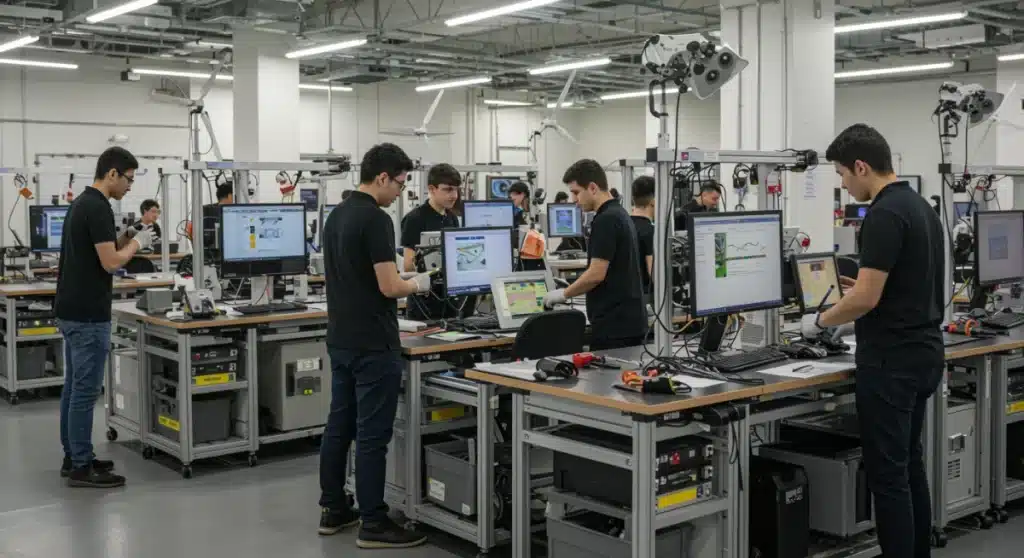
The resurgence of manufacturing in the US, coupled with the integration of automation and robotics, has created a pressing need for a highly skilled workforce. Modern factories are no longer reliant on purely manual labor but on technicians who can program, operate, and maintain complex machinery.
Vocational training in advanced manufacturing focuses on mechatronics, industrial automation, and robotics, preparing individuals for roles in smart factories. These programs combine mechanical, electrical, and computer science principles, reflecting the multidisciplinary nature of contemporary production.
This sector is critical for national innovation and economic resilience, ensuring that the US remains competitive in a globalized market. Investing in these skills is vital for the Future Vocational Training US strategy.
Robotics Technicians and Automation Specialists
Robotics technicians are essential for the deployment and upkeep of robotic systems used in manufacturing, logistics, and even healthcare. Their expertise ensures smooth operation and optimal performance.
Automation specialists design and implement automated processes, streamlining production lines and improving efficiency. Vocational programs provide hands-on experience with industrial robots and programmable logic controllers (PLCs).
- Robotic arm programming and calibration
- PLC troubleshooting and maintenance
- Automated system integration and optimization
Additive Manufacturing (3D Printing)
Additive manufacturing, commonly known as 3D printing, is transforming product design and production across multiple industries. Skilled technicians are increasingly needed for rapid prototyping, custom manufacturing, and specialized component development.
As demand grows, companies seek professionals who understand both the technical and creative aspects of this technology. Precision, efficiency, and innovation make 3D printing a strategic asset in modern manufacturing environments.
Vocational training in this field includes design software, material science, and advanced printer operation. Its impact is especially strong in aerospace, medical devices, and customized consumer goods, where flexibility and accuracy are essential.
Information Technology and Cloud Computing
The pervasive nature of information technology and the increasing reliance on cloud-based solutions mean that IT professionals are in constant demand. From managing networks to deploying cloud services, these roles are foundational to nearly every modern business operation.
Vocational training programs in IT and cloud computing offer practical skills in areas such as network administration, cloud platform management (e.g. AWS, Azure, Google Cloud), and technical support. These programs often lead to industry-recognized certifications.
The flexibility and scalability offered by cloud computing require a specialized workforce, making this sector a high-priority area for the Future Vocational Training US landscape. Graduates are crucial for digital transformation initiatives.
Cloud System Administrators
Cloud system administrators manage and maintain an organization’s cloud infrastructure, ensuring data security, system availability, and optimal performance. Their skills are pivotal for businesses leveraging cloud services.
Vocational training focuses on specific cloud platforms, giving students hands-on experience with virtual machines, storage solutions, and networking in a cloud environment. Certifications are often a direct gateway to employment.
- Cloud platform deployment and management
- Network configuration in cloud environments
- Security best practices for cloud infrastructure
IT Support Specialists and Help Desk Technicians

IT support specialists provide essential assistance to users by resolving technical issues and maintaining hardware and software systems. These roles often serve as the entry point into broader and more advanced IT careers.
Organizations depend on these professionals to keep operations running smoothly and minimize downtime. Their ability to troubleshoot quickly and communicate clearly makes them invaluable across industries.
Vocational programs focus on problem-solving, customer service, and a comprehensive understanding of computer systems and common applications. Strong diagnostic skills and practical experience are key outcomes of this hands-on training.
Preparing the Workforce for 2026 and Beyond
As these five emerging sectors continue to grow, the importance of robust vocational training programs cannot be overstated. Educational institutions, industry leaders, and government agencies must collaborate to ensure a skilled workforce capable of meeting future demands.
The focus must remain on practical, hands-on learning that provides immediate career readiness, bridging the gap between education and employment. This proactive approach will solidify the US position in the global economy.
By prioritizing adaptability and continuous skill development, the Future Vocational Training US initiatives will empower individuals to thrive in dynamic job markets and contribute to national prosperity. This is an ongoing commitment.
| Key Sector | Career Outlook |
|---|---|
| Green Energy | High demand for solar/wind technicians and energy efficiency specialists. |
| Cybersecurity / Data Analytics | Critical need for digital defenders and data interpreters across industries. |
| Healthcare Support | Consistent growth in medical assistants, technicians, and patient care roles. |
| Advanced Manufacturing | Rising demand for robotics technicians and additive manufacturing experts. |
Frequently Asked Questions About Vocational Training
Vocational training focuses on practical skills for specific jobs, offering direct pathways to employment. It’s crucial now due to rapid industry changes and a growing demand for skilled trades and technical roles that traditional education often doesn’t cover.
Emerging sectors include green energy technologies, cybersecurity and data analytics, healthcare support, advanced manufacturing and robotics, and information technology with cloud computing. These areas show significant job growth potential for the next few years.
Many vocational programs are designed for rapid skill acquisition, allowing graduates to enter the workforce in as little as a few months to two years. Certifications and associate degrees provide direct routes to in-demand jobs.
Yes, many vocational careers offer competitive salaries, often surpassing those requiring four-year degrees, especially in specialized fields like cybersecurity, advanced manufacturing, and certain healthcare roles. Demand drives higher compensation.
Certifications are vital in vocational training, validating specific skills and knowledge for employers. They often serve as industry standards, enhancing employability and demonstrating proficiency in a particular technical area, from IT to healthcare.
Looking Ahead: The Evolving Workforce Imperative
The insights into The Future of Vocational Training in the US: 5 Emerging Sectors for 2026 Career Readiness underscore a critical imperative for the nation’s economic health and individual prosperity.
The shift towards specialized, skills-based employment is not a temporary trend but a fundamental reorientation of the job market. Tracking these sectors and the training pathways they offer is essential for students, educators, and policymakers alike.
Ongoing collaboration between educational institutions and industries will be key to ensuring curricula remain current and responsive to technological advancements. This proactive approach will secure a competitive workforce and provide meaningful career opportunities for a diverse population.
By prioritizing adaptability and continuous skill development, the Future Vocational Training US initiatives will empower individuals to thrive in dynamic job markets and contribute to national prosperity. This is an ongoing commitment.