Geopolitical Events & U.S. Stock Market Volatility 2026
Anúncios
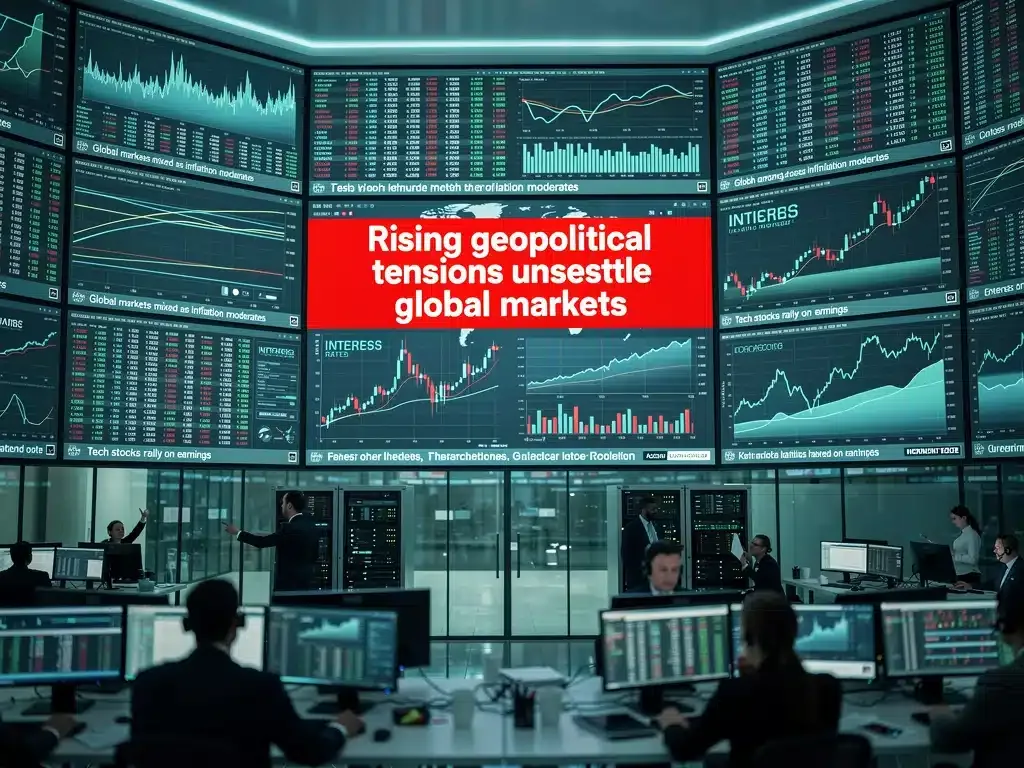
heightened global political shifts and macroeconomic conflicts are driving volatility across U.S. financial markets, influencing equity valuations and asset allocation strategies.
Emerging trade shifts, central bank policy adjustments, and supply chain disruptions require investors and policymakers to closely monitor geopolitical developments to maintain portfolio resilience during periods of market stress.
Understanding Geopolitical Market Volatility in Early 2026
The early months of 2026 have been marked by a series of significant geopolitical developments, ranging from regional conflicts to shifts in international trade alliances. These events have created an environment of heightened uncertainty, directly impacting investor sentiment and market behavior.
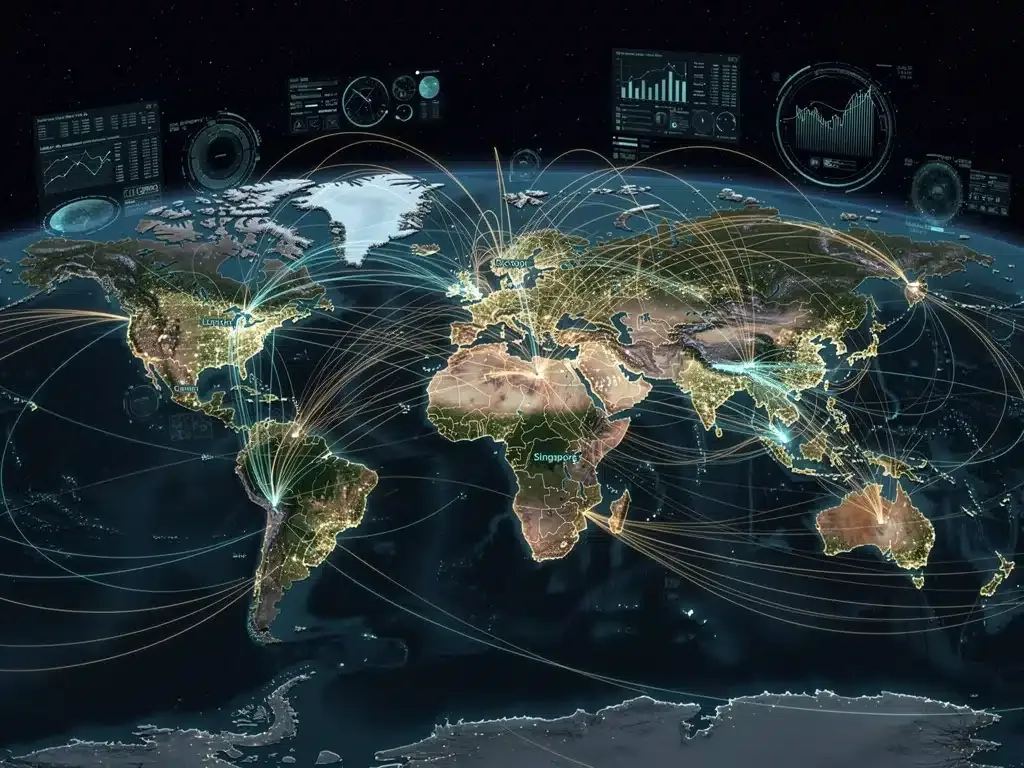
The interconnectedness of the global economy means that disturbances in one region can rapidly ripple through financial systems worldwide. This phenomenon is particularly evident in the U.S. stock market, a bellwether for global economic health.
Understanding the specific mechanisms through which these events translate into market volatility is crucial for navigating the current landscape. We examine the key drivers and their observed effects.
Anúncios
Regional Conflicts and Supply Chain Disruptions
Ongoing regional conflicts, particularly in energy-producing areas, have consistently posed a threat to global supply chains. The disruption of critical trade routes and resource availability directly impacts corporate earnings and consumer prices.
Companies reliant on international logistics face increased costs and delays, which can depress stock values. The uncertainty surrounding these conflicts also deters investment, further contributing to geopolitical market volatility 2026.
Energy price spikes due to Middle East tensions.
Shipping delays affecting manufacturing and retail sectors.
Increased insurance costs for international trade operations.
Trade Tensions and Economic Sanctions
Escalating trade disputes between major global economies continue to introduce significant uncertainty into the market. New tariffs or retaliatory measures can disrupt established economic relationships and reduce corporate profitability.
The imposition of economic sanctions on certain nations also has far-reaching consequences, affecting industries with ties to those regions. These measures can lead to market corrections as investors adjust their portfolios to mitigate risk and adapt to the changing regulatory environment.
Tariffs on key imported goods impacting consumer spending.
Restrictions on technology exports affecting innovation sectors.
Currency fluctuations in response to trade policy changes.
Key Drivers of U.S. Stock Market Fluctuations
The U.S. stock market, while robust, is not immune to external pressures. Several key factors amplify the impact of geopolitical events, leading to increased volatility.
These drivers include investor psychology, corporate earnings sensitivity, and the Federal Reserve’s policy responses. Each plays a distinct role in how global events translate into domestic market movements.
Analyzing these components provides a clearer picture of the complex interplay at hand, helping stakeholders anticipate and react to evolving market conditions. The heightened geopolitical market volatility 2026 is a testament to these interconnected forces.
Anúncios
Investor Sentiment and Risk Aversion
Geopolitical instability often triggers a flight to safety among investors, leading to a sell-off in riskier assets like stocks. Fear and uncertainty can cause rapid and significant market downturns, even if the direct economic impact is not immediately clear.
This psychological aspect of market behavior means that perceptions of risk can sometimes be as influential as actual economic data. News of escalating tensions or unexpected political shifts can quickly erode confidence, manifesting as increased geopolitical market volatility 2026.
Sudden dips in major indices following international incidents.
Increased demand for safe-haven assets like gold and U.S. Treasury bonds.
Reduced trading volumes as investors adopt a wait-and-see approach.
Corporate Earnings and Global Operations
Many U.S. corporations have extensive international operations, making their earnings susceptible to geopolitical disruptions. Conflicts, trade barriers, and political instability in key markets can directly reduce revenue and profitability.
Companies with diversified global supply chains are particularly vulnerable to these shocks. The ability of these firms to adapt to changing geopolitical realities directly influences their stock performance and, consequently, overall market stability, contributing to geopolitical market volatility 2026.
The Role of Energy Markets and Commodity Prices
Energy markets are particularly sensitive to geopolitical events, given the concentration of oil and gas production in politically volatile regions. Disruptions in these areas can lead to significant price swings, which have broad economic implications.
Rising energy costs can inflate production expenses for businesses and reduce consumer purchasing power, potentially slowing economic growth. This direct link makes energy prices a critical indicator of how geopolitical tensions are affecting the broader economy and contributing to geopolitical market volatility 2026.
Beyond energy, other commodities like industrial metals and agricultural products can also experience price volatility due to geopolitical factors. Trade restrictions, adverse weather conditions exacerbated by political instability, or conflicts in key producing regions can impact global supply and demand dynamics.
These commodity price fluctuations feed into inflation, influencing central bank policies and further impacting market sentiment. The ripple effect on various sectors means that commodity market movements are closely watched for their potential to trigger wider market instability.
Oil Price Shocks and Inflationary Pressures
Major geopolitical incidents often lead to immediate spikes in oil prices, as markets anticipate supply disruptions. These price increases translate into higher costs for transportation, manufacturing, and energy-intensive industries.
The resulting inflationary pressures can force central banks to consider tighter monetary policies, which can dampen economic activity and negatively impact stock valuations. This cycle is a significant contributor to geopolitical market volatility 2026.
Higher fuel costs impacting airline and logistics companies.
Increased manufacturing costs passed on to consumers.
Central bank interest rate hikes to combat inflation.
Government and Central Bank Responses to Volatility
In times of heightened geopolitical risk and market volatility, the responses of governments and central banks become critical. Their actions can either stabilize markets or inadvertently exacerbate existing tensions.
Fiscal policies, monetary interventions, and diplomatic efforts all play a role in shaping the economic environment. Understanding these responses is key to forecasting how geopolitical market volatility 2026 might evolve.
The coordination, or lack thereof, between international bodies and individual nations also significantly influences market confidence. Investors look for clear and decisive action to mitigate risk and restore stability.
Federal Reserve’s Monetary Policy Adjustments
The Federal Reserve closely monitors economic indicators and geopolitical developments. In response to increased volatility, the Fed might adjust interest rates or implement quantitative easing/tightening measures to stabilize the economy and markets.
These policy shifts can have a profound effect on borrowing costs, corporate investments, and overall market liquidity. Investors pay close attention to Fed announcements, as they can signal future economic direction and impact the severity of geopolitical market volatility 2026.
Fiscal Measures and International Cooperation
Governments may introduce fiscal stimulus packages or targeted aid to industries affected by geopolitical events. International cooperation, such as joint diplomatic efforts or coordinated economic sanctions, can also influence market perceptions of risk.
Such measures aim to cushion the economic blow and restore confidence, but their effectiveness can vary. The perceived strength and unity of international responses directly correlate with how markets react to ongoing geopolitical challenges, influencing geopolitical market volatility 2026.
<br>
Technological Advancements and Cyber Threats
The increasing reliance on digital infrastructure for financial transactions and market operations introduces new vulnerabilities to geopolitical tensions. Cyberattacks, often state-sponsored, can disrupt trading platforms, compromise sensitive data, and erode investor trust.
Such incidents not only cause immediate operational challenges but also raise concerns about the integrity and security of the financial system. The potential for cyber warfare to impact markets is a growing concern, contributing to geopolitical market volatility 2026.
Furthermore, the race for technological supremacy between global powers can lead to trade restrictions on critical components and intellectual property. This can disrupt innovation cycles, impact the profitability of tech companies, and create uncertainty for investors.
Cyberattacks on Financial Infrastructure
State-sponsored cyberattacks targeting financial institutions or stock exchanges can lead to significant market disruptions. Such attacks can cause trading halts, data breaches, and a loss of confidence in the security of financial systems.
The potential for these incidents to trigger widespread panic and sell-offs is a serious concern for regulators and investors. Protecting critical financial infrastructure from these evolving threats is paramount to mitigating geopolitical market volatility 2026.
Disruption of trading platforms leading to temporary market closures.
Compromised investor data eroding trust in financial institutions.
Increased cybersecurity spending by financial firms.
Long-Term Implications for U.S. Economic Stability
While early 2026 highlights immediate market reactions, the long-term implications of sustained geopolitical tensions on U.S. economic stability are also a significant concern. These events can reshape global economic landscapes and alter investment patterns.
Persistent uncertainty can deter foreign direct investment, impact long-term corporate planning, and potentially lead to a reallocation of global capital. Understanding these enduring effects is crucial for a comprehensive view of the economic outlook.
The resilience of the U.S. economy in adapting to these shifts will determine its future trajectory. Policy decisions made today will have lasting consequences on its ability to withstand and recover from external shocks, influencing the long-term trajectory of geopolitical market volatility 2026.
Shifting Global Investment Patterns
Prolonged geopolitical instability can lead to a fundamental reassessment of investment destinations. Capital may flow away from regions perceived as high-risk towards more stable markets, including the U.S., but also potentially away from it if domestic policies are seen as less reliable.
This reallocation of capital can affect asset prices, currency valuations, and the availability of funding for various sectors. The changing dynamics of global investment are a critical aspect of how geopolitical events reshape economic futures.
Future Outlook and Predictive Models
As we move further into 2026, analysts are refining predictive models to better anticipate the impact of geopolitical events on market volatility. These models incorporate a wider range of political, social, and economic indicators to provide more nuanced forecasts.
The challenge remains in accurately quantifying the unpredictable nature of human decision-making and political shifts. However, advancements in data analytics and artificial intelligence are offering new tools for understanding complex interdependencies.
Investors are increasingly seeking out sophisticated analyses that go beyond traditional economic indicators. The focus is shifting towards integrated risk assessments that factor in geopolitical scenarios, helping them navigate the evolving landscape of geopolitical market volatility 2026.
Integrating Geopolitical Risk into Investment Strategies
Investment firms are increasingly incorporating geopolitical risk assessments into their portfolio management strategies. This involves stress-testing portfolios against various geopolitical scenarios and diversifying assets to mitigate potential losses.
The goal is to build more resilient portfolios that can withstand unexpected global shocks. This proactive approach to risk management is becoming a standard practice for navigating the complexities of geopolitical market volatility 2026.
Key Point | Brief Description |
|---|---|
Global Conflicts | Regional conflicts disrupt supply chains and energy markets, fueling volatility. |
Trade Tensions | Tariffs and sanctions alter economic ties, impacting corporate earnings and market sentiment. |
Central Bank Actions | Federal Reserve policy adjustments critically influence market stability amid global shocks. |
Cyber Threats | Digital attacks on financial infrastructure add new layers of risk and uncertainty. |
Frequently Asked Questions on Geopolitical Market Volatility
How do geopolitical events directly cause U.S. stock market volatility?▼
Geopolitical events trigger volatility by creating uncertainty, impacting investor sentiment, and disrupting global supply chains. They can lead to sudden shifts in commodity prices, particularly oil, and affect corporate earnings, prompting rapid market reactions and increased risk aversion among investors.
What specific types of geopolitical events are most influential in early 2026?▼
In early 2026, key influential events include regional conflicts in energy-producing areas, escalating trade tensions between major economic powers, and the increasing threat of state-sponsored cyberattacks on financial infrastructure. These factors collectively contribute significantly to U.S. stock market fluctuations.
How does the Federal Reserve respond to geopolitical market volatility?▼
The Federal Reserve monitors geopolitical developments closely and may adjust monetary policy, such as interest rates or quantitative easing, to stabilize the economy and markets. Their actions aim to mitigate inflationary pressures or support liquidity, influencing borrowing costs and investor confidence in response to global shocks.
What role do supply chain disruptions play in market volatility?▼
Supply chain disruptions, often a direct consequence of geopolitical conflicts or trade disputes, increase production costs and lead to delays for businesses. These issues can reduce corporate profitability, impact consumer prices, and contribute to inflationary pressures, all of which weigh heavily on stock market performance and investor confidence.
How can investors prepare for increased geopolitical market volatility in 2026?▼
Investors can prepare by diversifying portfolios across different asset classes and geographies, incorporating geopolitical risk assessments into their strategies, and staying informed about global developments. Focusing on companies with resilient supply chains and strong balance sheets can also help mitigate the impact of external shocks.
Looking Ahead: Navigating Geopolitical Market Volatility
The intricate relationship between geopolitical events and U.S. stock market volatility in early 2026 underscores the need for constant vigilance and adaptive strategies.
As global dynamics continue to evolve, the ability to anticipate and respond to these shifts will be paramount for investors, businesses, and policymakers alike.
The ongoing impact of geopolitical market volatility 2026 demands a nuanced understanding of interconnected global forces. To track market risk indicators, macroeconomic metrics, and ongoing global developments, consult the BlackRock Investment Institute Geopolitical Risk Dashboard.