New Disability Benefits in 2026: Policy Shifts Unpacked

Anúncios
Latest developments on Disability Benefits, with key facts, verified sources and what readers need to monitor next in Estados Unidos, presented clearly in Inglês (Estados Unidos) (en-US).
Disability Benefits is shaping today’s agenda with new details released by officials and industry sources. This update prioritizes what changed, why it matters and what to watch next, in a straightforward news format.
Anúncios
The discussion around new disability benefits in 2026 has intensified, as various federal agencies and legislative bodies finalize significant adjustments. These changes are poised to reshape the landscape of support for millions of Americans, demanding close attention from beneficiaries, advocates, and policymakers alike.
Understanding the Legislative Framework for New Disability Benefits in 2026
The legislative efforts leading to the new disability benefits in 2026 have been extensive, involving various committees and public consultations. These processes aim to modernize existing frameworks, addressing both long-standing issues and emerging needs within the disability community.
Anúncios
Key proposals have focused on streamlining application processes, revising medical review standards, and adjusting benefit calculations to reflect current economic realities. The objective is to create a more efficient and equitable system for all applicants.
Experts suggest that these legislative changes are a response to mounting pressures on the Social Security Disability Insurance (SSDI) and Supplemental Security Income (SSI) programs. The goal is to ensure the long-term sustainability and effectiveness of these crucial support systems.
Key Policy Drivers and Congressional Intent
Congressional intent behind the new disability benefits in 2026 centers on improving access to benefits and enhancing financial stability for eligible individuals. Lawmakers have emphasized the need for a system that is both compassionate and fiscally responsible.
Discussions have frequently highlighted the importance of reducing application backlogs and improving the accuracy of disability determinations. These operational improvements are vital for a more responsive and fair system.
Furthermore, there’s a strong push to support beneficiaries in returning to work where possible, integrating employment incentives into the new policy structure. This aims to foster greater independence and economic participation.
Stakeholder Feedback and Public Discourse
- Advocacy groups have played a crucial role, providing extensive feedback on proposed changes and highlighting potential impacts on vulnerable populations. Their input has been instrumental in shaping the final legislative language.
- Public hearings and comment periods allowed individuals and organizations to voice concerns and suggest modifications, ensuring a broad range of perspectives were considered. This transparent process is designed to build trust and legitimacy.
- Economists and social policy experts have offered analyses on the fiscal implications and societal benefits of the reforms, contributing to a robust public discourse. Their insights are critical for understanding the broader ramifications.
The interplay of these factors has culminated in a refined set of policies that are now poised to define the landscape of new disability benefits in 2026. This collaborative approach underscores the complexity and importance of these reforms.
Anticipated Changes to Eligibility Criteria and Application Processes
One of the most significant aspects of the new disability benefits in 2026 involves revisions to eligibility criteria. These changes could impact who qualifies for benefits and how their applications are evaluated, potentially broadening or narrowing the scope of eligible conditions.
The Social Security Administration (SSA) is expected to implement new guidelines for medical evaluations, possibly incorporating more recent diagnostic tools and therapeutic approaches. This aims to ensure that determinations are based on the most current medical understanding.
Procedural modifications are also on the horizon, with an emphasis on digitizing applications and streamlining administrative steps. The goal is to reduce processing times and make the application journey less daunting for individuals seeking new disability benefits in 2026.
Revised Medical Definitions and Assessment Tools
The updated policies for new disability benefits in 2026 may introduce revised medical definitions for certain conditions, reflecting advancements in medical science. This could lead to more precise and consistent disability determinations across the board.
New assessment tools and methodologies are being considered to improve the accuracy and fairness of disability evaluations. These tools aim to capture a more holistic view of an applicant’s functional limitations, rather than solely focusing on diagnosis.
Training for medical examiners and adjudicators will be crucial to ensure a uniform understanding and application of these revised definitions and tools. This standardization is vital for equitable outcomes.
Streamlined Application Pathways for New Disability Benefits in 2026
Efforts to streamline the application process for new disability benefits in 2026 include enhanced online portals and clearer guidance for applicants. The aim is to simplify what can often be a complex and lengthy procedure.
The SSA is exploring options to reduce the documentation burden on applicants, potentially allowing for greater reliance on existing medical records from treating physicians. This could significantly cut down on the time and effort required for applications.
Faster initial reviews and improved communication channels between applicants and the SSA are also key objectives. These enhancements are designed to provide a more user-friendly experience for those navigating the system.
Projected Impact on Beneficiaries and Financial Implications
The projected impact of the new disability benefits in 2026 on current and future beneficiaries is a central concern. Changes to benefit amounts, cost-of-living adjustments, and work incentives could significantly affect individuals’ financial well-being.
Analysts are closely examining how these policy shifts will influence poverty rates among people with disabilities and their families. The goal is to ensure that reforms lead to improved economic security, not increased hardship.
Furthermore, the long-term financial stability of the SSDI and SSI programs themselves is a critical consideration. The new disability benefits in 2026 are designed to balance individual needs with fiscal responsibility, aiming for sustainable solutions.
Adjustments to Benefit Amounts and Cost-of-Living
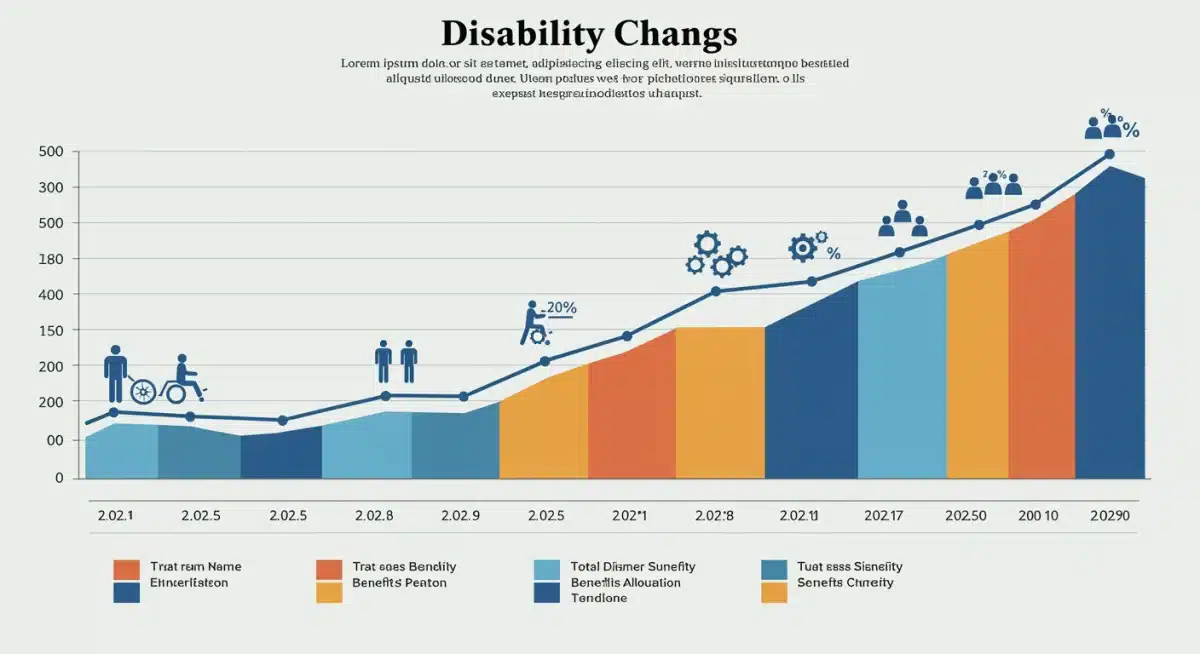
Discussions surrounding the new disability benefits in 2026 include potential adjustments to monthly benefit amounts, which could be tied to new economic indicators. These changes aim to ensure benefits remain adequate in the face of inflation.
The method for calculating Cost-of-Living Adjustments (COLAs) may also see revisions, potentially impacting the purchasing power of benefits over time. Keeping pace with inflation is essential for beneficiaries’ financial stability.
Any changes in benefit amounts will be closely scrutinized for their impact on various demographic groups, particularly those already facing economic vulnerability. Equity and fairness are paramount in these adjustments.
Work Incentives and Return-to-Work Programs
- The new disability benefits in 2026 are expected to bolster work incentive programs, making it easier for beneficiaries to explore employment opportunities without immediately losing their benefits. This encourages self-sufficiency.
- Expanded access to vocational rehabilitation services and job placement assistance will be a key component, providing beneficiaries with the tools and support needed to re-enter the workforce.
- Policies may introduce more flexible earnings limits and trial work periods, allowing individuals to test their ability to work while retaining a safety net of benefits. This gradual transition is crucial for many.
These provisions underscore a broader shift towards empowering beneficiaries through employment, whenever feasible and appropriate. The new disability benefits in 2026 seek to integrate support for work alongside essential financial aid.
Technological Advancements and Their Role in 2026 Reforms
Technological advancements are set to play a pivotal role in the implementation of new disability benefits in 2026. Digital platforms and data analytics are being leveraged to enhance efficiency, accuracy, and accessibility throughout the system.
The use of artificial intelligence and machine learning could potentially aid in processing applications and identifying trends, although ethical considerations and data privacy remain key concerns. These tools promise to speed up administrative tasks.
Improved online resources and digital communication channels will empower applicants and beneficiaries with real-time information and easier access to support services. This modernization aims to create a more responsive system for new disability benefits in 2026.
Digital Transformation of SSA Services
The Social Security Administration is investing in a significant digital transformation to support the new disability benefits in 2026. This includes upgrading its IT infrastructure and developing more user-friendly online tools.
Applicants can expect more robust online application portals, allowing for secure submission of documents and tracking of application status. This reduces reliance on traditional mail and in-person visits.
The digital shift also extends to internal SSA processes, improving data management and inter-agency coordination. This comprehensive overhaul aims to enhance operational efficiency across the board.
Enhanced Data Security and Privacy Measures
With increased digitization comes a heightened focus on data security and privacy for new disability benefits in 2026. Robust cybersecurity protocols are being implemented to protect sensitive personal and medical information.
Compliance with federal data protection regulations is a top priority, ensuring that all digital interactions maintain the highest standards of confidentiality. Trust in the system is paramount for beneficiaries.
Audits and regular security assessments will be conducted to identify and address potential vulnerabilities, safeguarding the integrity of the new disability benefits in 2026 system. This proactive approach is essential for maintaining public confidence.
Regional Disparities and Equitable Access to Benefits
Addressing regional disparities in access to and processing of new disability benefits in 2026 is a critical challenge. Variations in local resources, economic conditions, and administrative capacities can lead to unequal outcomes for applicants across the country.
Policy discussions have focused on strategies to ensure equitable access, regardless of an applicant’s geographic location. This includes standardizing practices and providing additional support to underserved areas.
The goal for new disability benefits in 2026 is to minimize these geographical differences, ensuring that all eligible individuals receive fair and timely consideration. This commitment to equity is a cornerstone of the reforms.
Targeted Outreach to Underserved Communities
Specific initiatives are being developed to conduct targeted outreach to underserved communities for new disability benefits in 2026. These efforts aim to inform individuals about their rights and available support, overcoming barriers such as language or lack of awareness.
Partnerships with local community organizations and non-profits will be crucial in reaching populations that may have historically faced challenges in accessing federal programs. This collaborative approach enhances accessibility.
Mobile outreach units and educational campaigns are also being considered to bring information directly to communities, simplifying the process of understanding and applying for new disability benefits in 2026.
Standardization of Review Processes Across States
- The SSA is working to standardize review processes across all states, reducing inconsistencies that can arise from variations in local administrative interpretations. This promotes fairness and predictability.
- Implementing uniform training programs for adjudicators and medical consultants nationwide will ensure a consistent application of new eligibility criteria. This minimizes subjective differences in decision-making.
- Regular performance audits of state-level disability determination services will help identify and address any deviations from federal guidelines. This oversight is vital for maintaining equity in the new disability benefits in 2026 system.
These measures collectively aim to create a more uniform and equitable system, ensuring that the new disability benefits in 2026 are administered consistently regardless of where an applicant resides.
Advocacy and Support Systems for Beneficiaries
Advocacy groups and support systems will remain indispensable as new disability benefits in 2026 come into effect. These organizations provide crucial assistance, guidance, and representation for individuals navigating the complexities of the disability benefits system.
Their role includes informing beneficiaries about their rights, helping with application processes, and challenging adverse decisions through appeals. This support is vital for ensuring fair outcomes.
As policies evolve, these support systems will adapt to provide updated information and tailored assistance, ensuring that beneficiaries are well-equipped to understand and access their new disability benefits in 2026.
The Role of Legal Aid and Disability Rights Organizations
Legal aid services and disability rights organizations are preparing to assist individuals with the new disability benefits in 2026. They offer expertise in interpreting complex regulations and representing applicants in legal proceedings.
These organizations often provide free or low-cost legal assistance, making expert guidance accessible to those who might otherwise struggle to afford it. Their advocacy is critical for protecting beneficiaries’ rights.
They also play a significant role in monitoring the implementation of new policies, identifying potential issues, and advocating for necessary adjustments to ensure the system works effectively for all. Their oversight is invaluable for new disability benefits in 2026.
Community Resources and Educational Programs
- Local community centers and non-profits are developing educational programs to inform the public about the new disability benefits in 2026. These programs aim to demystify the changes and provide practical advice.
- Workshops and informational sessions will offer opportunities for beneficiaries to ask questions and receive personalized guidance on how the reforms might affect them. Knowledge is power in navigating these changes.
- Online resources, including updated websites and informational videos, will complement in-person support, ensuring a wide reach for critical information related to new disability benefits in 2026.
The collective effort of these various support systems will be essential in helping beneficiaries adapt to and benefit from the new disability benefits in 2026. Their ongoing commitment ensures that no one is left behind in this evolving landscape.
Future Outlook and Long-Term Sustainability of Benefits
The future outlook for new disability benefits in 2026 centers on ensuring long-term sustainability and adaptability to future societal and economic shifts. Policymakers are looking beyond immediate reforms to anticipate evolving needs.
Discussions are ongoing regarding potential future adjustments to funding mechanisms and program structures to guarantee the solvency of disability programs for generations to come. This forward-thinking approach is crucial.
The goal is to establish a robust and resilient system that can continue to provide essential support while remaining fiscally responsible. The long-term vision for new disability benefits in 2026 is one of stability and enduring impact.
Demographic Trends and Program Solvency

Demographic trends, such as an aging population and changing workforce dynamics, are key factors influencing the long-term solvency of new disability benefits in 2026. These shifts necessitate careful planning and adaptation.
Projections on disability prevalence and application rates are being closely monitored to inform future policy decisions. Understanding these trends is vital for maintaining program stability.
Actuarial analyses regularly assess the financial health of SSDI and SSI, providing critical insights into potential funding gaps and the need for proactive adjustments. This vigilance ensures the viability of new disability benefits in 2026.
Potential for Further Reforms Beyond 2026
- The current reforms for new disability benefits in 2026 may serve as a foundation for further policy adjustments in subsequent years. The system is designed to be dynamic and responsive to ongoing needs.
- Ongoing research and pilot programs will continue to explore innovative approaches to disability support, potentially leading to additional legislative changes down the line. Continuous improvement is a key principle.
- Public discourse and stakeholder engagement will remain crucial in shaping future reforms, ensuring that the disability benefits system continues to evolve in a way that best serves its beneficiaries. This collaborative spirit is essential for new disability benefits in 2026.
The implementation of new disability benefits in 2026 marks a significant milestone, but it is also part of an ongoing commitment to strengthen and secure support for individuals with disabilities in the long term.
| Key Aspect | Summary of Changes |
|---|---|
| Eligibility Criteria | Revised medical definitions and assessment tools for more precise determinations. |
| Application Process | Streamlined digital pathways and reduced documentation burden for applicants. |
| Beneficiary Support | Enhanced work incentives and targeted outreach to underserved communities. |
| Program Sustainability | Focus on adapting to demographic trends and ensuring long-term solvency. |
Frequently Asked Questions About New Disability Benefits in 2026
The primary goals are to modernize the disability benefits system, enhance accessibility and efficiency, and ensure long-term financial stability. These reforms also aim to provide more equitable support for all eligible individuals across the United States, reflecting current economic and social needs.
Eligibility criteria are expected to see revisions in medical definitions and assessment tools, aligning with contemporary medical understanding. These changes aim for more precise and consistent disability determinations, ensuring fairness while also streamlining the evaluation process for applicants.
Technological advancements will drive significant improvements, including digitized application processes, enhanced online portals, and improved data analytics. The goal is to reduce processing times, increase accuracy, and provide beneficiaries with more user-friendly access to information and services, all while maintaining robust security.
While many changes focus on new applicants, current beneficiaries may experience adjustments in benefit calculations, cost-of-living increases, or access to enhanced work incentive programs. It is crucial for existing beneficiaries to stay informed about specific changes that could impact their current support.
Reliable information can be found on the official Social Security Administration (SSA) website, through disability advocacy organizations, and legal aid services. These sources provide the most accurate and up-to-date details regarding policy changes and assistance available to applicants and beneficiaries.
Looking Ahead: The Path for New Disability Benefits in 2026
The implementation of new disability benefits in 2026 represents a pivotal moment for millions of Americans. These policy shifts are designed to create a more responsive, equitable, and sustainable system, addressing both current needs and future challenges.
As these reforms take effect, continued vigilance will be essential to monitor their real-world impact on beneficiaries and program solvency. The commitment to ongoing evaluation ensures that the system remains relevant and effective.
Stakeholders, beneficiaries, and the public must remain engaged, advocating for continuous improvements and adaptations to the new disability benefits in 2026. This collective effort will shape the future of disability support in the United States.