2026 Family Leave Policies: Comparing State-Level Benefits
Anúncios
Latest developments on Family Leave show rapid expansion at the state level, with more workers gaining access to paid benefits. As of 2026, at least 13 states and Washington, D.C. have enacted paid family and medical leave (PFML) programs, significantly broadening coverage beyond federal standards.
Recent updates highlight key policy changes, including expanded eligibility, higher wage replacement rates, and stronger job protection rules. For example, New York now offers up to 12 weeks of paid leave at 67% of wages, while states like Colorado and Delaware have introduced extended benefits and new protections for workers.
Looking ahead, employees and employers should monitor evolving state regulations, eligibility thresholds, and payroll contribution requirements. Key factors include new state program launches, compliance obligations for multi-state employers, and potential federal-level reforms that could standardize family leave across the country.
Anúncios
Understanding the Evolving Landscape of 2026 State Family Leave
The year 2026 is set to introduce a series of modifications and new implementations in state-specific family leave benefits across the United States. These changes arise from a combination of legislative initiatives, evolving social demands, and economic considerations impacting both workers and businesses.
Anúncios
Many states are refining existing programs or launching new ones, aiming to provide more comprehensive support for parental leave, care for ill family members, and personal medical needs. This dynamic environment necessitates a close examination of each state’s particular framework to ensure accurate understanding and compliance.
For employees, these updates can mean enhanced job security and financial stability during critical life moments, while employers face the challenge of adapting internal policies to meet diverse state requirements. The overall goal is to foster a more supportive work-life balance for the American workforce.
Key Legislative Changes and New State Programs for 2026
Several states have either passed new legislation or are in the final stages of implementing expanded family leave programs set to take effect in 2026. These legislative efforts aim to close gaps in federal provisions and offer more robust protections and benefits to workers.
For instance, some states are introducing paid family and medical leave (PFML) insurance programs, funded through employee and/or employer contributions, providing partial wage replacement during leave. Other states are extending the duration of unpaid leave or broadening the definition of family members for whom leave can be taken.
These new programs often come with specific eligibility criteria, contribution rates, and benefit caps, making it essential to delve into the specifics of each state’s plan. The impact of these changes will vary significantly depending on geographic location and industry.
Expansion of Paid Family and Medical Leave (PFML)
The trend towards expanding PFML programs continues to gain momentum, with more states enacting comprehensive paid leave policies for 2026.
These programs typically cover a wider array of reasons for leave, including bonding with a new child, caring for a seriously ill family member, or managing a serious personal health condition.
States like Colorado, Oregon, and Washington have already established robust PFML systems, and others are following suit, with their programs becoming fully operational or significantly enhanced by 2026.
The nuances of these expansions include varying weekly benefit amounts, maximum leave durations, and employer size exemptions.
Defining ‘Family Member’ and Eligibility Criteria
- Many states are broadening the definition of ‘family member’ to include domestic partners, grandparents, grandchildren, and chosen family, reflecting diverse household structures.
- Eligibility often hinges on a minimum number of hours worked or wages earned within a specified base period, ensuring that only those with a significant attachment to the workforce qualify.
- Some states also differentiate between full-time and part-time employees, with varying requirements for accessing benefits.
Comparing Benefit Durations and Payout Structures
One of the most critical aspects of Family Leave involves understanding the duration of leave available and how benefits are calculated. These factors directly influence an individual’s ability to take necessary time off without undue financial hardship.
The duration of paid leave can range from a few weeks to several months, depending on the state and the reason for leave.
Payout structures also vary widely, with some states offering a higher percentage of average weekly wages for lower-income workers, while others apply a flat percentage across all income levels up to a cap.
Employers and employees must navigate these complexities, as the financial implications can be substantial. A clear understanding of these parameters is key to effective planning and utilization of benefits.
Variations in Leave Duration Across States
The length of paid family leave available in 2026 will differ significantly from one state to another.
For instance, some states might offer up to 12 weeks for parental bonding, while others may provide 8 weeks for caring for a seriously ill family member, with distinct limits for different types of leave.
These durations often represent the maximum allowable time, and individuals may choose to take shorter periods as needed. The cumulative effect of these varying durations means that a worker’s experience with family leave benefits can be vastly different based on their state of residence.
Understanding Wage Replacement Rates and Caps
- Wage replacement rates typically range from 60% to 90% of an individual’s average weekly wage, though these percentages often decrease for higher earners.
- Most states impose a weekly benefit cap, meaning that even if the percentage calculation yields a higher amount, the actual payout will not exceed this maximum.
- These caps are often tied to the state’s average weekly wage, adjusting annually to reflect economic changes and ensuring benefits remain relevant.
Impact on Employers: Compliance and Operational Adjustments
The expansion and modification of family leave present significant challenges and opportunities for employers. Compliance with diverse state regulations requires careful attention to detail and potentially substantial operational adjustments, impacting everything from payroll to human resources policies.
Employers must not only understand the legal requirements but also consider the administrative burden of managing these programs, including record-keeping, contribution remittances, and coordination with state agencies. Proactive planning is essential to mitigate potential disruptions and ensure a smooth transition.
Beyond compliance, these benefits can also serve as a powerful tool for talent attraction and retention, as employees increasingly value workplaces that support work-life balance. Adapting effectively can enhance an employer’s reputation and foster a more engaged workforce.
Navigating State-Specific Contribution Mechanisms
Many state PFML programs are funded through payroll deductions, requiring employers to collect and remit contributions from both employees and, in some cases, themselves. The contribution rates and the split between employer and employee can vary significantly by state.
Understanding these contribution mechanisms is crucial for accurate payroll processing and financial forecasting.
Employers must also be aware of any reporting requirements to state agencies, ensuring timely and correct submission of data to avoid penalties.
Policy Updates and Employee Communication Strategies
- Employers need to update their employee handbooks and internal policies to reflect the new 2026 state-specific family leave benefits, ensuring all information is current and accurate.
- Clear and consistent communication with employees about their rights and the process for applying for leave is paramount to avoid confusion and foster trust.
- Developing comprehensive communication strategies, including workshops, informational sessions, and easily accessible resources, can help employees navigate the complexities of these benefits.
Employee Perspectives: Accessing and Utilizing Benefits
For employees, Family Leave is directly about their ability to manage personal and family responsibilities without jeopardizing their careers or financial well-being.
Accessing and effectively utilizing these benefits requires a clear understanding of the application process, required documentation, and their rights under state law.
The process can sometimes be daunting, involving multiple forms, deadlines, and coordination with both employers and state agencies. Employees need to be proactive in gathering information and preparing for their leave to ensure a seamless experience.
Ultimately, these benefits are designed to provide peace of mind and support during significant life events, empowering employees to balance their professional and personal lives more effectively. Knowledge is power when it comes to leveraging these crucial protections.
Application Processes and Documentation Requirements
Applying for state family leave benefits typically involves submitting an application to the relevant state agency, often with supporting documentation from healthcare providers or birth certificates.
The exact requirements can vary, so employees should consult their state’s specific guidelines well in advance.
Timelines for application submission are also critical; some states require notice weeks or even months before the planned leave. Missing these deadlines can delay or even jeopardize benefit approval, making meticulous planning essential for individuals.
Understanding Job Protection and Reinstatement Rights
- Most state family leave laws include provisions for job protection, meaning an employee’s job or an equivalent position must be held for them upon their return from approved leave.
- It is important for employees to understand the specific conditions under which job protection applies, including any length of service requirements or employer size thresholds.
- Reinstatement rights ensure that employees can return to their previous role without loss of benefits or seniority, though exceptions may apply in certain circumstances, such as business necessity.
Potential Challenges and Unintended Consequences
While the expansion of Family Leave is largely seen as a positive development, it is not without potential challenges and unintended consequences. These can affect both the operational efficiency of businesses and the equitable distribution of benefits among the workforce.
For employers, managing the administrative burden of varying state laws, particularly for those operating across multiple states, can be complex and costly. There’s also the potential for staffing shortages during periods of high leave utilization, impacting productivity and client service.
For employees, disparities in benefits between states could lead to a ‘patchwork’ system where access and generosity of leave depend heavily on geographical location, potentially creating inequities.
Additionally, some small businesses might struggle to absorb the costs or administrative complexities, leading to difficult decisions.
Disparities Between States and Mobility Issues
The inherent state-specific nature of these benefits means that individuals who move between states may find themselves subject to entirely different rules and benefit structures.
This lack of uniformity can complicate financial planning and access to leave for a mobile workforce.
Such disparities can also create competitive disadvantages for businesses located in states with more generous or costly programs, potentially influencing location decisions and economic development. The absence of a federal standard continues to highlight these state-level differences.
Administrative Burden for Small Businesses
- Small businesses often lack the dedicated HR staff and resources that larger corporations have to navigate complex family leave regulations, making compliance particularly challenging.
- The financial impact of employee contributions and the cost of temporary replacement workers during leave can be more acutely felt by smaller enterprises.
- Some states offer exemptions or special provisions for very small businesses, but these are not universal, and understanding them adds another layer of complexity.

Future Outlook and Advocacy for Federal Standards
The ongoing evolution of Family Leave underscores a broader national conversation about the need for comprehensive family leave policies. While state-level initiatives are crucial, many advocates continue to push for a federal standard to ensure consistency and equity across the nation.
A federal program could streamline processes for multi-state employers and provide a baseline of benefits for all American workers, regardless of their state of residence. This would address many of the challenges posed by the current fragmented system.
Discussions at the federal level continue, with various proposals being debated, signaling a long-term trajectory towards more comprehensive and uniform family leave support. The lessons learned from state implementations in 2026 will undoubtedly inform these future federal debates.
The Push for Uniform National Policies
Advocacy groups, labor organizations, and even some business coalitions are increasingly calling for the establishment of uniform national family leave policies.
They argue that a federal standard would simplify compliance, reduce administrative overhead, and ensure all workers have access to vital benefits.
Such a standard would likely build upon the successes and address the shortcomings observed in the various state programs, creating a more cohesive and efficient system. The goal is to move beyond the current patchwork approach to a more integrated national framework.
Lessons from State Implementations Shaping Future Debates
- The experiences of states that have successfully implemented PFML programs offer valuable insights into best practices for administration, funding, and public awareness campaigns.
- Challenges encountered by states, such as funding shortfalls or administrative bottlenecks, provide critical data for refining future policy proposals at both state and federal levels.
- The impact of these programs on workforce participation, gender equity, and economic productivity is continually being studied, informing ongoing policy discussions and legislative efforts.
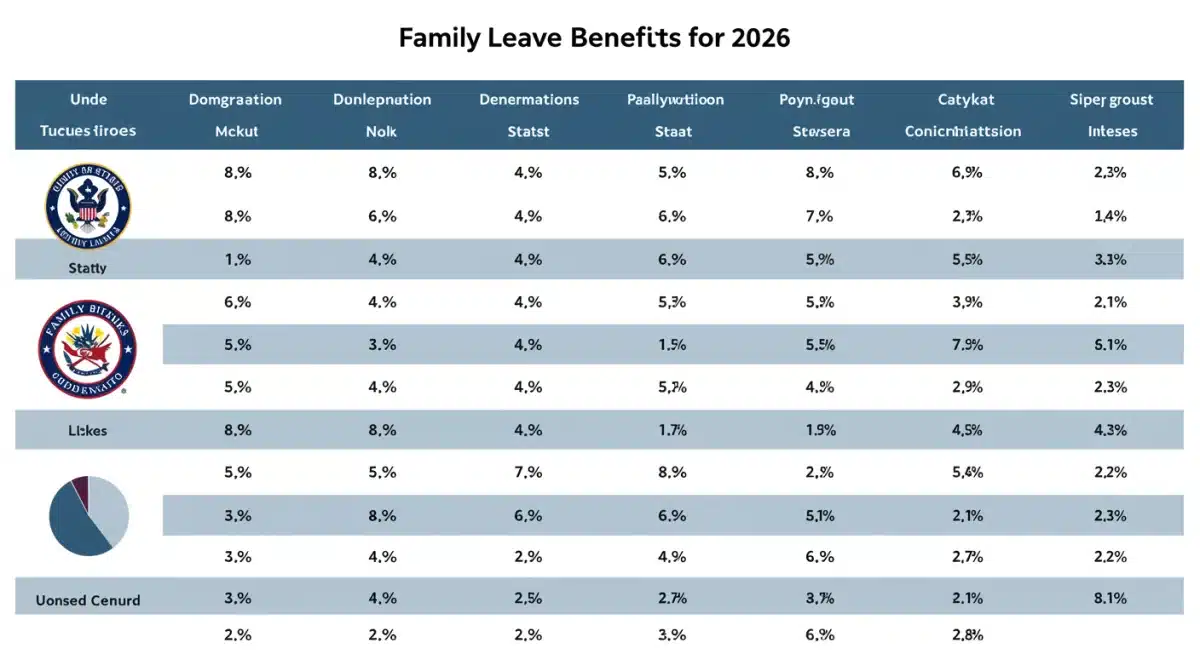
| Key Aspect | Brief Description |
|---|---|
| Eligibility Varies | State programs have distinct criteria for who qualifies for family leave benefits. |
| Benefit Duration | The length of available leave differs significantly from state to state in 2026. |
| Funding Mechanisms | Some states use payroll deductions; others have different funding models. |
| Employer Impact | Businesses face compliance and operational adjustments due to new state laws. |
Frequently Asked Questions About 2026 State Family Leave Benefits
Primary reasons typically include bonding with a new child (birth, adoption, foster care), caring for a seriously ill family member, or managing a serious personal health condition. Some states also cover military family leave or safe leave for domestic violence. Specific definitions vary by state law.
You should consult your state’s official labor department website or human resources department. Many states are implementing or expanding programs for 2026, so checking current legislation and resources is the most reliable way to confirm available benefits.
Yes, FMLA (Family and Medical Leave Act) and state family leave often run concurrently if the reason for leave qualifies under both laws. However, state laws can offer more generous benefits or broader eligibility, so it’s essential to understand how they interact for your specific situation.
Employers should review current state laws, update employee handbooks, train HR staff, and adjust payroll systems for any new contributions or benefit calculations. Clear communication with employees about policy changes is also crucial for smooth implementation and compliance.
Yes, while paid leave offers wage replacement, it’s typically not 100% of your salary. Employees should understand the wage replacement rate, any weekly benefit caps, and if contributions are deducted from their pay. This helps in financial planning during their leave period.
What this means
The shifting landscape of Family Leave signifies a critical juncture for American workers and businesses. These changes will undoubtedly influence workforce dynamics, economic stability for families, and corporate responsibility.
Understanding the specific nuances of each state’s policy is paramount for effective planning and compliance.
Moving forward, both employees and employers must remain vigilant, monitoring legislative updates and advocating for policies that strike a balance between support for families and sustainable business operations. The ongoing dialogue about federal standards will continue to be informed by these state-level experiences.
The insights gained from Family Leave will shape future conversations around work-life balance and social safety nets, underscoring the importance of staying informed and prepared for evolving regulations.