Federal Reserve’s Latest Stance: 2 Rate Hikes by Q3 2026
Anúncios
Latest developments on Federal Reserve’s Latest Stance: 2 Interest Rate Hikes Expected by Q3 2026, with key facts, verified sources and what readers need to monitor next in Estados Unidos, presented clearly in Inglês (Estados Unidos) (en-US).
The Federal Reserve’s Latest Stance: 2 Interest Rate Hikes Expected by Q3 2026 is shaping today’s agenda with new details released by officials and industry sources. This update prioritizes what changed, why it matters and what to watch next, in a straightforward news format.
Understanding the implications of these projected hikes is crucial for businesses, investors, and everyday citizens across the United States. The Federal Reserve’s forward guidance provides a roadmap for future economic conditions, influencing everything from borrowing costs to market sentiment.
As the economic landscape continues to evolve, staying informed about these monetary policy shifts becomes paramount. This article aims to break down the complexities, offering a clear and objective perspective on what lies ahead.
Federal Reserve’s Official Projections Revealed
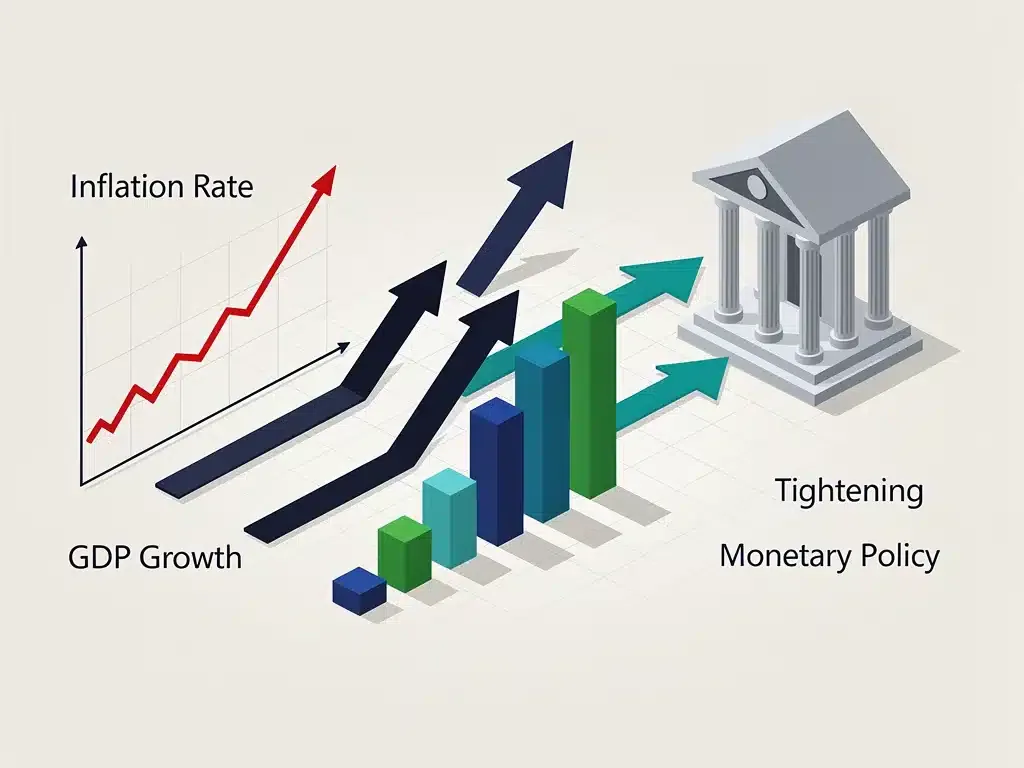
The Federal Reserve recently unveiled its updated economic projections, indicating a significant shift in its monetary policy outlook. These projections now factor in two anticipated interest rate hikes by the third quarter of 2026, signaling a more aggressive approach to managing inflation than previously expected.
Anúncios
This revised stance reflects the central bank’s ongoing assessment of economic data, including persistent inflation pressures and a robust labor market. Policymakers are recalibrating their strategies to ensure long-term price stability while supporting sustainable economic growth.
The announcement has prompted widespread discussion among economists and financial analysts, all attempting to decipher the full scope of its impact. The market’s reaction, while initially mixed, is now settling as investors absorb the implications of this forward guidance.
Understanding the Dot Plot and its Significance
The Federal Reserve’s ‘dot plot,’ a graphical representation of individual Federal Open Market Committee (FOMC) members’ projections for the federal funds rate, plays a crucial role in communicating future policy. The latest dot plot clearly illustrates the consensus for two rate increases within the specified timeframe.
This tool provides valuable insight into the collective thinking of the FOMC, offering a glimpse into their expectations for economic growth, inflation, and unemployment. While not a commitment, it serves as a strong indicator of the central bank’s likely trajectory.
Interpreting the dot plot requires careful consideration, as it represents a range of views rather than a single, fixed outcome. However, the emerging consensus around the two hikes by Q3 2026 underscores a growing hawkish sentiment within the Fed.
Factors Influencing the Fed’s Decision
Several key economic indicators have influenced the Federal Reserve’s decision to project these rate hikes. Stubbornly high inflation, particularly in core goods and services, remains a primary concern for policymakers, necessitating actions to bring it back to the target 2%.
The strength of the U.S. labor market, characterized by low unemployment rates and consistent wage growth, also contributes to the Fed’s confidence in tightening monetary policy. A robust job market suggests the economy can absorb higher borrowing costs without significant disruption.
Anúncios
Global economic conditions and geopolitical uncertainties also factor into the Fed’s calculus, as these external forces can impact domestic inflation and growth prospects. The central bank must balance these various factors to formulate an effective monetary policy.
Economic Implications for Businesses and Consumers
The projected interest rate hikes by the Federal Reserve will have far-reaching economic implications for both businesses and consumers across the United States. Higher rates typically translate to increased borrowing costs, affecting everything from mortgages to corporate loans.

For consumers, this means higher interest rates on credit cards, car loans, and adjustable-rate mortgages. The cost of financing major purchases will rise, potentially cooling demand in certain sectors of the economy.
Businesses will face higher costs for capital, impacting investment decisions and expansion plans. Small businesses, in particular, may find it more challenging to secure affordable financing, potentially slowing their growth.
However, higher interest rates can also benefit savers, as deposit accounts and certificates of deposit (CDs) may offer more attractive returns. This shift could encourage saving, providing a counterweight to increased borrowing costs.
Impact on Housing Market Dynamics
The housing market is particularly sensitive to changes in interest rates. The prospect of two Federal Reserve rate hikes by Q3 2026 suggests that mortgage rates are likely to remain elevated or even increase further, impacting affordability and demand.
Higher mortgage rates can cool an overheated housing market, making homeownership less accessible for some prospective buyers. This could lead to a moderation in home price growth, or even declines in certain regions, depending on local market conditions.
Existing homeowners with fixed-rate mortgages will largely be unaffected by these changes, but those with adjustable-rate mortgages could see their monthly payments increase. The overall effect will be a more challenging environment for both buyers and sellers.
Corporate Borrowing and Investment Outlook
For corporations, the projected rate hikes mean a higher cost of capital for new investments and refinancing existing debt. This can influence corporate strategies, potentially leading to a slowdown in capital expenditure and mergers and acquisitions.
Companies with significant debt loads may face increased interest expenses, impacting their profitability and cash flow. This could prompt businesses to re-evaluate their financial structures and seek more efficient ways to manage their debt.
Despite these challenges, some sectors may prove more resilient, particularly those with strong balance sheets and less reliance on external financing. The overall corporate landscape will likely adapt to the new interest rate environment, with a focus on efficiency and fiscal prudence.
Navigating Market Volatility and Investor Strategies
The Federal Reserve’s latest stance, projecting two interest rate hikes by Q3 2026, is likely to contribute to continued market volatility. Investors are closely scrutinizing every statement and economic data point for clues about the Fed’s next moves, influencing asset prices across various classes.
Equity markets may experience fluctuations as investors adjust their valuations to account for higher discount rates and potential impacts on corporate earnings. Sectors sensitive to interest rates, such as technology and real estate, could face particular headwinds.
Fixed-income markets, on the other hand, will see bond yields react directly to the Fed’s policy trajectory. Higher rates generally lead to lower bond prices, presenting both challenges and opportunities for bond investors.
Diversification and a long-term investment horizon become even more critical during periods of monetary policy tightening. Investors should review their portfolios and consider strategies that align with a rising interest rate environment.
Sectoral Performance Under Rising Rates
Certain sectors historically perform better or worse during periods of rising interest rates. Financials, for instance, often benefit from higher rates, as banks can earn more on their lending activities, improving net interest margins.
Energy and materials sectors may also show resilience, driven by commodity prices and global demand. Conversely, growth-oriented sectors, which rely heavily on future earnings projections, can be more vulnerable to higher discount rates.
Understanding these sectoral dynamics can help investors position their portfolios strategically. However, it is essential to remember that past performance is not indicative of future results, and market conditions can change rapidly.
Strategies for Bond Investors
For bond investors, the prospect of two Federal Reserve rate hikes by Q3 2026 necessitates a careful review of their fixed-income holdings. Shorter-duration bonds may be preferable, as they are less sensitive to interest rate changes than long-duration bonds.
Exploring inflation-protected securities (TIPS) could also be a viable strategy, as these instruments are designed to preserve purchasing power during inflationary periods. Diversifying across different types of fixed-income assets can help mitigate risk.
Considering active management strategies that allow for adjustments based on market conditions may also be beneficial. The goal is to balance income generation with capital preservation in a potentially challenging bond market environment.
Global Economic Repercussions
The Federal Reserve’s projected interest rate hikes do not operate in a vacuum; they carry significant global economic repercussions. As the world’s largest economy, U.S. monetary policy decisions have a ripple effect on international markets, currencies, and capital flows.
A stronger U.S. dollar, often a consequence of higher interest rates, can make American exports more expensive and imports cheaper. This can impact trade balances and competitiveness for other nations.
Emerging markets, in particular, may face challenges as capital flows tend to shift towards higher-yielding U.S. assets. This can lead to currency depreciation and increased borrowing costs for developing economies.

Central banks around the world will be closely watching the Federal Reserve’s actions, potentially influencing their own monetary policy decisions. The interconnectedness of the global financial system means that U.S. rate hikes can trigger a cascade of responses worldwide.
Impact on International Capital Flows
Higher interest rates in the United States tend to attract foreign capital, as investors seek better returns on their investments. This influx of capital can strengthen the U.S. dollar, as demand for the currency increases.
Conversely, this can lead to capital outflows from other countries, particularly emerging markets, which may struggle to compete with the attractive yields offered by U.S. assets. Such outflows can destabilize financial markets and put pressure on local currencies.
Policymakers in these affected countries may need to implement measures to counter these capital movements, such as raising their own interest rates or imposing capital controls, to maintain economic stability.
Influence on Global Trade and Currencies
The strengthening of the U.S. dollar due to higher interest rates has direct implications for global trade. U.S. goods become more expensive for foreign buyers, potentially reducing export volumes and impacting the competitiveness of American industries.
Conversely, foreign goods become cheaper for U.S. consumers, which can contribute to lower import prices but also exacerbate trade deficits. These currency dynamics can create winners and losers in the global trading landscape.
Many countries peg their currencies to the U.S. dollar or manage their exchange rates in relation to it. Therefore, changes in the dollar’s value can necessitate adjustments in their own monetary policies and economic strategies to maintain stability.
The Role of Inflation and Labor Market Data
The Federal Reserve’s ongoing assessment of inflation and labor market data is paramount in shaping its monetary policy decisions, including the projected two interest rate hikes by Q3 2026. These indicators provide critical insights into the health and trajectory of the U.S. economy.
Persistent inflation, particularly in core components, remains a central concern for the Fed. While some inflationary pressures have eased, others, such as those related to services, have proven more stubborn, necessitating a continued focus on price stability.
The strength of the labor market, characterized by low unemployment rates and robust job creation, provides the Fed with the flexibility to tighten monetary policy without significantly jeopardizing economic growth. A tight labor market often contributes to wage growth, which can, in turn, feed into inflationary pressures.
The interplay between these two key indicators will continue to guide the Federal Reserve’s actions. Any significant shifts in either inflation or employment trends could lead to adjustments in the central bank’s projected path for interest rates.
Monitoring Inflationary Trends
The Federal Reserve closely monitors a range of inflation metrics, including the Consumer Price Index (CPI) and the Personal Consumption Expenditures (PCE) price index, with a particular focus on core inflation, which excludes volatile food and energy prices.
Understanding the drivers of inflation, whether they are demand-driven, supply-side constraints, or a combination of both, is crucial for the Fed to formulate an appropriate policy response. The central bank aims to anchor inflation expectations to prevent a self-fulfilling spiral of rising prices.
Forward-looking indicators, such as inflation expectations derived from financial markets and consumer surveys, also play a role in the Fed’s assessment. These indicators help gauge the public’s perception of future price trends, which can influence spending and investment decisions.
Analyzing Labor Market Dynamics
The labor market’s strength is a key factor in the Federal Reserve’s economic outlook. Metrics such as the unemployment rate, job openings, wage growth, and labor force participation provide a comprehensive picture of employment conditions.
A tight labor market, where demand for workers outstrips supply, can lead to upward pressure on wages, which may contribute to inflation. The Fed seeks to achieve maximum employment in a manner consistent with its price stability mandate.
Any signs of significant weakness in the labor market could prompt the Federal Reserve to reconsider its aggressive stance on interest rate hikes. Conversely, continued strength reinforces the rationale for tightening monetary policy to prevent overheating.
Future Outlook and Policy Flexibility
The Federal Reserve’s latest stance, projecting two interest rate hikes by Q3 2026, provides a clear forward-looking signal, yet the central bank maintains its commitment to data-dependency and policy flexibility. This means the actual path of interest rates could deviate based on evolving economic conditions.
Policymakers have repeatedly emphasized that their decisions are not set in stone and will be adjusted as new economic data becomes available. This agile approach allows the Fed to respond effectively to unforeseen challenges or opportunities in the economy.
Market participants and the public should therefore view these projections as a baseline, subject to change. Continuous monitoring of economic reports, particularly those related to inflation and employment, will be essential for anticipating potential shifts in policy.
The Fed’s ability to adapt its strategy will be crucial in navigating the complexities of the post-pandemic economic environment, ensuring both price stability and sustainable growth.
Potential Scenarios for Rate Adjustments
Several scenarios could influence the Federal Reserve’s actual rate hike trajectory. If inflation proves more persistent than expected, the Fed might accelerate the pace of tightening or implement more than the projected two hikes.
Conversely, a significant slowdown in economic growth or an unexpected increase in unemployment could lead the Fed to pause or even reverse its tightening plans. Global economic shocks or geopolitical events could also necessitate a change in strategy.
The Fed also considers the financial stability implications of its policies. Any signs of stress in the banking system or broader financial markets could influence the timing and magnitude of future rate adjustments, demonstrating the multifaceted nature of monetary policy.
Communication and Forward Guidance
Effective communication and forward guidance are critical tools for the Federal Reserve to manage market expectations and ensure a smooth transmission of monetary policy. By clearly articulating its intentions, the Fed aims to reduce uncertainty and promote financial stability.
The use of the dot plot, economic projections, and regular press conferences by the Fed Chair are all part of this communication strategy. These tools help market participants understand the central bank’s thinking and anticipate future policy moves.
However, the challenge lies in balancing clear guidance with the necessary flexibility to adapt to changing economic realities. The Fed must remain credible while also reserving the right to adjust its course as circumstances dictate.
| Key Point | Brief Description |
|---|---|
| Rate Hike Projection | Federal Reserve expects two interest rate hikes by Q3 2026. |
| Economic Drivers | Persistent inflation and strong labor market underpin the Fed’s stance. |
| Market Impact | Higher borrowing costs for consumers and businesses, potential market volatility. |
| Policy Flexibility | Fed’s approach remains data-dependent, allowing for adjustments to projections. |
Frequently Asked Questions on Fed Rate Hikes
What is the Federal Reserve’s Latest Stance: 2 Interest Rate Hikes Expected by Q3 2026? ▼The Federal Reserve’s latest projections indicate that the central bank anticipates implementing two interest rate increases by the third quarter of 2026. This stance is based on current economic data, particularly concerning inflation and the labor market, aiming to achieve long-term price stability.
Why is the Federal Reserve projecting two rate hikes? ▼The Fed is projecting these rate hikes primarily to combat persistent inflation and ensure it returns to its target of 2%. A strong labor market also provides the central bank with the confidence to tighten monetary policy without significantly hindering economic growth.
How will these rate hikes impact consumers in the U.S.? ▼Consumers can expect higher borrowing costs on various loans, including mortgages, credit cards, and car loans. This may lead to reduced demand for certain goods and services, but savers could see improved returns on their deposits.
What does this mean for the U.S. housing market? ▼The housing market is likely to experience higher mortgage rates, potentially impacting affordability and cooling demand. This could lead to a moderation in home price growth, making homeownership more challenging for some prospective buyers.
Are these rate hike projections set in stone? ▼No, the Federal Reserve emphasizes its data-dependent approach and policy flexibility. While these are current projections, the actual path of interest rates could change based on evolving economic conditions, inflation trends, and labor market data.
What this means
The Federal Reserve’s Latest Stance: 2 Interest Rate Hikes Expected by Q3 2026 clarifies the central bank’s commitment to price stability amidst ongoing economic shifts. This forward guidance signals a period of higher borrowing costs and potential market adjustments, impacting various sectors from housing to corporate investment.
As the Fed remains data-dependent, continuous monitoring of inflation, labor market reports, and global economic developments will be crucial. These factors will ultimately determine the precise timing and magnitude of future rate adjustments, shaping the economic landscape for years to come.
For businesses and consumers, understanding these dynamics is essential for informed financial planning and strategic decision-making. The coming quarters will provide further clarity on the effectiveness of these policies and their long-term implications.