Future of Work 2026: 5 Trends Reshaping US Labor Market
Anúncios
The Future of Work 2026 is being shaped by major structural changes across the U.S. labor market, driven by technological innovation, evolving employee expectations, and shifting economic conditions. Analysts report that businesses are increasingly redesigning workplace models to balance productivity, flexibility, and long-term workforce resilience.
In the field of labor economics, five key trends are emerging as dominant forces: the continued expansion of hybrid and remote work, deeper integration of artificial intelligence into daily operations, accelerated demand for digital and soft skills training, rapid growth of gig and freelance employment models, and stronger emphasis on employee mental health and well-being programs. Employers are also reevaluating management structures and workplace culture to adapt to these transformations.
Experts advise both companies and workers to monitor AI regulation, workforce automation trends, evolving labor policies, and changes in employee benefit expectations throughout 2026. Organizations that invest in adaptability, continuous learning, and flexible work strategies are expected to remain more competitive as the future of work continues evolving across the United States.
Anúncios
The Enduring Shift to Hybrid and Remote Work Models
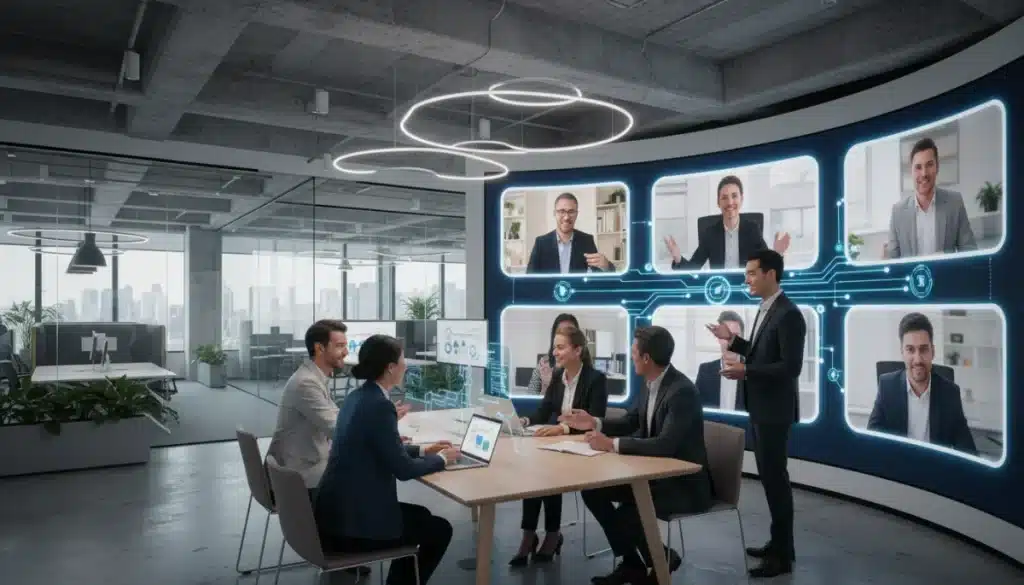
The pandemic undeniably accelerated the adoption of remote work, a trend that by 2026, has cemented its place as a permanent fixture in the U.S. labor market. Companies are increasingly embracing hybrid models, offering employees the flexibility to split their time between office and home.
Anúncios
This shift is driven by both employee demand for greater work-life balance and employer recognition of reduced overheads and expanded talent pools. The traditional office-centric approach is being replaced by more adaptable structures, fundamentally altering corporate real estate needs and operational strategies.
The implications extend beyond mere location, influencing company culture, communication strategies, and even the types of leadership skills required. The Future of Work 2026 will see a continued refinement of these hybrid models, with best practices emerging for seamless integration.
Remote Work’s Operational Impact
The operational challenges and benefits of widespread remote work are becoming clearer as organizations gain more experience.
While initial concerns about productivity have largely been allayed, new considerations around cybersecurity, digital infrastructure, and equitable access to technology have risen to prominence.
Companies are investing heavily in robust VPNs, cloud-based collaboration tools, and home office stipends to support their distributed workforces effectively. This technological backbone is critical for maintaining efficiency and security in the evolving work environment.
- Enhanced talent acquisition capabilities, reaching beyond geographical limits.
- Significant reduction in office space expenditures and associated costs.
- Increased employee satisfaction and retention due to greater flexibility.
- Challenges in fostering team cohesion and informal knowledge sharing.
Employee Expectations for Flexibility
Employee expectations regarding work location and hours have irrevocably changed. A significant portion of the workforce now views flexibility as a non-negotiable benefit, often prioritizing it over higher salaries when considering job opportunities.
This demand is particularly strong among younger generations entering the workforce, who have grown up with digital connectivity and expect their professional lives to reflect this fluidity. Employers failing to offer such options risk losing out on top talent in a competitive market.
The push for flexibility also includes asynchronous work arrangements, allowing employees to complete tasks outside traditional 9-to-5 schedules. This autonomy empowers individuals to manage personal commitments, contributing to overall well-being and productivity in the Future of Work 2026.
Artificial Intelligence and Automation Redefining Roles
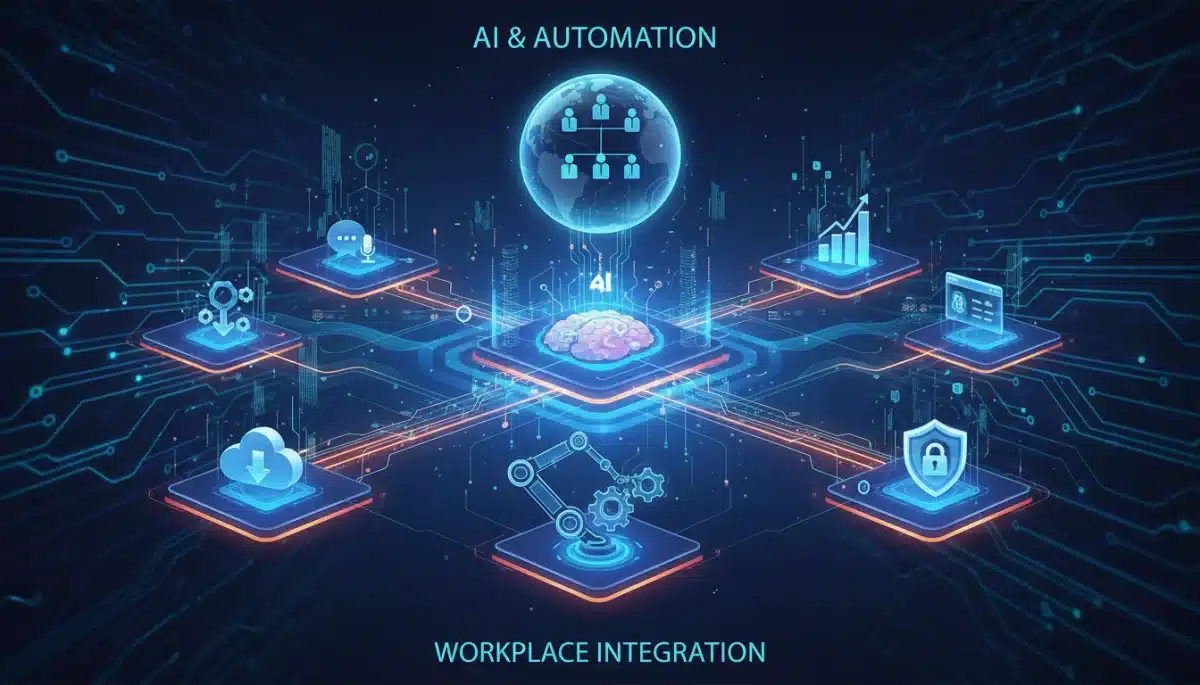
Artificial intelligence (AI) and automation are no longer futuristic concepts; they are actively reshaping job roles and operational processes across industries. By 2026, these technologies will be deeply embedded in various sectors, augmenting human capabilities and streamlining repetitive tasks.
This integration is leading to a re-evaluation of necessary skills, emphasizing human-centric abilities such as critical thinking, creativity, and emotional intelligence. While some roles may be automated, new opportunities are emerging in areas of AI development, maintenance, and ethical oversight.
The U.S. labor market is adapting to this technological wave, with businesses strategically deploying AI to enhance efficiency and innovation. Understanding the interplay between human workers and intelligent systems is key to navigating the Future of Work 2026.
AI’s Impact on Productivity and Job Creation
AI’s primary impact often revolves around boosting productivity by automating routine and data-intensive tasks, freeing up human workers for more complex and strategic initiatives. This efficiency gain can lead to higher output and improved service delivery across various industries.
While concerns about job displacement persist, historical patterns suggest that technological advancements often create more jobs than they eliminate, albeit different ones. The rise of AI will necessitate roles in AI ethics, data science, machine learning engineering, and human-AI collaboration specialists.
Businesses that skillfully integrate AI will likely see competitive advantages, but successful implementation relies on proactive workforce planning and investment in new skill sets. The Future of Work 2026 hinges on this symbiotic relationship.
- Increased efficiency and accuracy in data processing and analysis.
- Emergence of new job categories focused on AI development and oversight.
- Potential for job displacement in roles involving highly repetitive tasks.
- Demand for workers with skills in human-AI interaction and collaboration.
Ethical Considerations and Responsible AI Deployment
As AI becomes more prevalent, ethical considerations surrounding its deployment are gaining significant traction. Issues such as algorithmic bias, data privacy, and the transparency of AI decision-making are paramount for responsible integration.
Companies are under increasing pressure to develop and implement AI systems that are fair, accountable, and transparent. Regulations and industry standards are beginning to emerge to govern the ethical use of these powerful technologies.
Addressing these ethical dilemmas is not just a moral imperative but also a business necessity to build trust with customers and employees. Ensuring responsible AI deployment is a critical aspect of the Future of Work 2026.
Addressing the Evolving Skills Gap and Lifelong Learning
The rapid pace of technological change and evolving business models are creating a persistent and widening skills gap in the U.S. labor market. Traditional education pathways often struggle to keep pace, necessitating a greater emphasis on continuous learning and upskilling.
By 2026, skills such as digital literacy, data analytics, cybersecurity, and critical problem-solving will be in exceptionally high demand. Employers are recognizing the need to invest in their existing workforce, providing opportunities for reskilling and professional development.
The concept of lifelong learning is no longer a niche idea but a fundamental requirement for career longevity and organizational agility. This focus on continuous development is central to the Future of Work 2026.
The Imperative of Upskilling and Reskilling
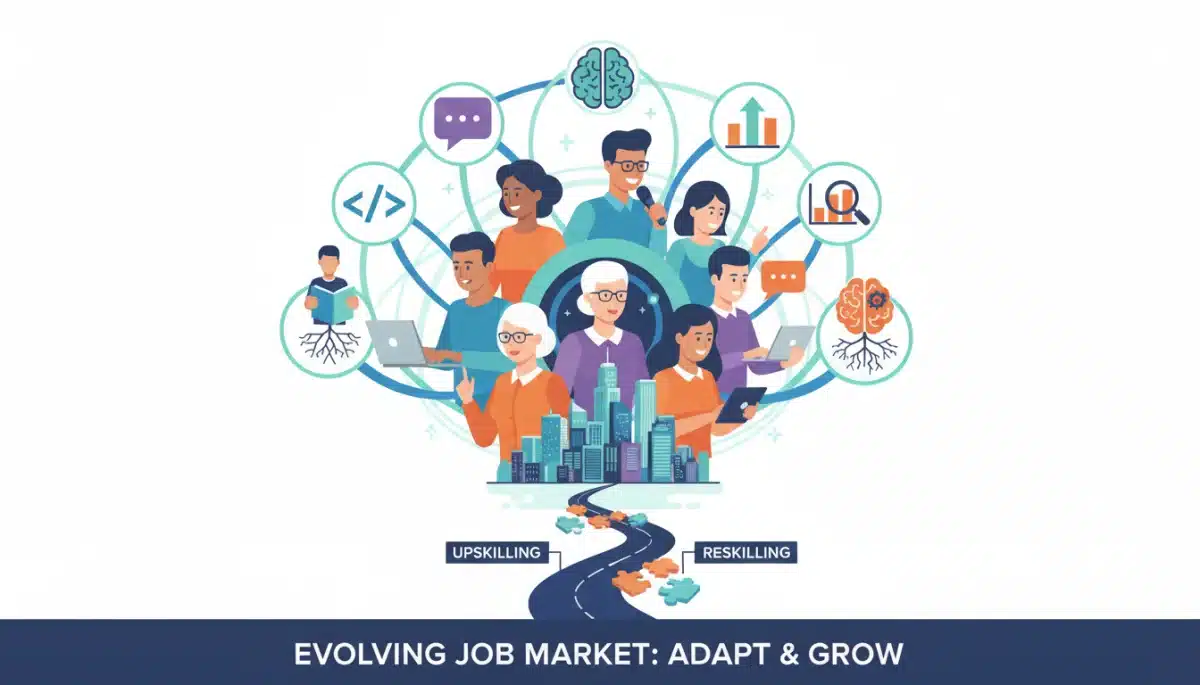
For individuals, the ability to adapt and acquire new skills will be a defining characteristic of professional success. Workers must proactively engage in upskilling to stay relevant in their current roles and reskilling to transition into emerging occupations.
For organizations, investing in comprehensive upskilling and reskilling programs is a strategic imperative to maintain a competitive workforce and address talent shortages. This internal talent development is often more cost-effective than constantly recruiting externally.
Government initiatives and private sector partnerships are also playing a role in developing accessible and effective training programs. The collective effort to bridge the skills gap is vital for the health of the U.S. economy in the Future of Work 2026.
- Increased demand for digital competencies and data literacy.
- Growth of online learning platforms and micro-credentialing programs.
- Employer-led training initiatives becoming more commonplace.
- Emphasis on soft skills like adaptability, collaboration, and critical thinking.
Personalized Learning Pathways
The future of learning is becoming increasingly personalized, moving away from one-size-fits-all training modules. AI-powered platforms are enabling customized learning pathways that cater to individual needs, learning styles, and career aspirations.
This tailored approach maximizes the effectiveness of training, ensuring that employees acquire the most relevant skills in the most efficient manner. It also empowers individuals to take greater ownership of their professional development.
The shift towards personalized learning is a critical enabler for continuous skill acquisition, supporting both individual career growth and organizational capabilities. This dynamic learning environment is a hallmark of the Future of Work 2026.
The Expansion and Evolution of the Gig Economy
The gig economy, characterized by temporary, flexible jobs and independent contractors, continues its rapid expansion and evolution. By 2026, it will represent an even more substantial portion of the U.S. labor market, offering both challenges and opportunities for workers and businesses.
This growth is fueled by a desire for greater autonomy among workers and a need for agility and specialized skills among companies. The traditional employment model is being supplemented by a more fluid and project-based approach to work.
Regulatory frameworks are also catching up to the complexities of this sector, aiming to balance worker protections with the flexibility inherent in gig employment. The gig economy is a significant component of the Future of Work 2026.
Benefits and Challenges for Gig Workers
For many, the gig economy offers unparalleled flexibility, allowing individuals to set their own hours, choose their projects, and dictate their work-life balance. This autonomy can lead to higher job satisfaction for those who thrive in independent work structures.
However, gig work often comes with challenges such as a lack of traditional benefits like health insurance, paid time off, and retirement plans. Income stability can also be a concern, as work availability can fluctuate significantly.
Efforts are underway to address these disparities, with some platforms offering limited benefits and policymakers exploring new classification models for gig workers. Navigating these complexities is key to a sustainable gig economy in the Future of Work 2026.
- Increased worker autonomy and flexible schedules.
- Lack of traditional employee benefits and social safety nets.
- Diverse income streams and opportunities for specialized skills.
- Regulatory debates around worker classification and protections.
Impact on Traditional Employment Structures
The rise of the gig economy is prompting traditional businesses to rethink their staffing strategies and talent acquisition processes. Companies are increasingly leveraging independent contractors for specific projects, allowing them to scale operations efficiently without the overhead of full-time employees.
This trend also places pressure on traditional employers to offer more competitive benefits and flexible arrangements to retain their full-time staff. The lines between contingent and permanent work are becoming increasingly blurred.
The interplay between the gig economy and traditional employment will continue to evolve, with hybrid models emerging that combine aspects of both. This dynamic relationship is a defining characteristic of the Future of Work 2026.
Emphasis on Employee Well-being and Mental Health
Employee well-being and mental health have moved from being peripheral concerns to central strategic priorities for organizations. The stresses of modern work, coupled with global events, have highlighted the critical importance of supporting a holistic view of employee health.
By 2026, companies are expected to offer more comprehensive wellness programs, including mental health support, stress management resources, and initiatives promoting work-life integration. A healthy workforce is increasingly recognized as a productive and engaged one.
This shift reflects a growing understanding that employee well-being directly impacts productivity, retention, and overall organizational success. Investing in employee health is an investment in the Future of Work 2026.
Holistic Wellness Programs
Modern wellness programs extend beyond physical health, encompassing mental, emotional, and financial well-being. Employers are providing access to therapy, counseling services, mindfulness training, and financial literacy workshops.
These programs are often integrated into broader company culture, promoting open dialogue about mental health and destigmatizing seeking support. Leadership plays a crucial role in modeling healthy behaviors and fostering a supportive environment.
The effectiveness of these programs relies on accessibility, confidentiality, and genuine commitment from leadership. Prioritizing holistic wellness is fundamental to attracting and retaining talent in the Future of Work 2026.
Work-Life Integration vs. Work-Life Balance
The traditional concept of work-life balance, implying a strict separation, is giving way to work-life integration, especially with the prevalence of remote and hybrid models. This approach acknowledges that work and personal life often intertwine and seeks to create harmony between them.
Companies are supporting this by offering flexible schedules, generous paid time off, and encouraging employees to take breaks and disconnect. The goal is to prevent burnout and ensure sustained engagement.
Promoting a culture that respects personal boundaries and encourages employees to prioritize their well-being is vital. This shift in perspective is a key driver of employee satisfaction and retention, shaping the Future of Work 2026.
| Key Trend | Brief Description |
|---|---|
| Hybrid Work Models | Flexible blend of remote and in-office work, driven by employee demand and operational efficiency. |
| AI & Automation | AI redefining job roles, boosting productivity, and creating new opportunities in specialized fields. |
| Skills Gap & Learning | Urgency for continuous upskilling and reskilling to meet evolving demands of the labor market. |
| Gig Economy Growth | Expansion of flexible, contract-based work, influencing traditional employment structures. |
Frequently Asked Questions About the Future of Work 2026
By 2026, remote work is expected to primarily manifest as hybrid models, balancing in-office collaboration with remote flexibility. Companies will refine policies, invest in digital infrastructure, and focus on fostering inclusive cultures for distributed teams. Employee expectations for flexibility will drive these adaptations, making hybrid a standard rather than an exception in the Future of Work 2026.
AI will transform, not necessarily eliminate, most jobs. While some routine tasks will be automated, AI is also creating new roles in development, maintenance, and ethical oversight. Job security will increasingly depend on a worker’s ability to adapt, learn new skills, and collaborate effectively with AI tools, emphasizing human creativity and critical thinking in the Future of Work 2026.
Key skills for the future workforce include digital literacy, data analysis, cybersecurity, and proficiency in human-AI interaction. Additionally, soft skills like critical thinking, adaptability, creativity, emotional intelligence, and complex problem-solving will be paramount. Continuous learning and a growth mindset are essential for navigating the evolving demands of the Future of Work 2026.
The gig economy’s expansion is pushing for new models of benefits. While traditional benefits are often absent, some platforms are experimenting with portable benefits or limited protections. Regulatory bodies are also exploring new classifications for gig workers to ensure better social safety nets, influencing how benefits are structured in the Future of Work 2026.
Employee well-being, encompassing mental and physical health, is now a top priority because it directly impacts productivity, retention, and organizational culture. Companies recognize that supporting employees’ holistic health leads to a more engaged and resilient workforce. This focus is crucial for attracting and retaining talent, defining a humane aspect of the Future of Work 2026.
Looking Ahead: Navigating the Evolving Landscape
The trends discussed paint a clear picture of a dynamic and challenging, yet opportunity-rich, U.S. labor market by 2026. Businesses must proactively adapt their strategies, focusing on technological integration, continuous learning, and a people-first approach to employee well-being. For individuals, embracing lifelong learning and developing adaptable skill sets will be paramount to thriving.
The Future of Work 2026 is not a static destination but an ongoing journey of adaptation and innovation. Organizations that prioritize flexibility, leverage AI responsibly, invest in their workforce’s development, and champion holistic well-being will be best positioned for success.
Staying informed about these evolving trends and their implications will be crucial for all stakeholders. The coming years promise continued transformation, making proactive engagement with the forces shaping the Future of Work 2026 an imperative for sustained growth and prosperity.