Commuter Fringe Benefits 2026: Maximize Your $325 Monthly Transit Allowance
Anúncios
Commuter fringe benefits in 2026 can help eligible employees manage transportation costs by allowing qualified transit and parking expenses to be paid on a pre-tax basis.
The $325 monthly allowance highlighted for 2026 creates an opportunity for workers to reduce taxable income while covering eligible commuting expenses.
Understanding contribution limits, qualifying expenses and employer administration can help both employees and companies make more effective use of these transportation benefits.
Understanding the 2026 Commuter Benefits Landscape
Commuter fringe benefits in 2026 provide employees with a way to use pre-tax income for eligible transportation and qualified parking expenses.
The $325 monthly limit highlighted for the year can increase the amount employees are able to direct toward commuting costs through participating employer programs.
Anúncios
Employers and employees should understand how the benefit operates, which expenses qualify and how elections are administered within the company's specific plan.
Key Changes and Adjustments for 2026
The principal change associated with commuter fringe benefits in 2026 is the updated monthly amount available for qualified transportation and parking expenses.
This adjustment can affect employee contribution elections as well as the systems employers use to administer payroll deductions and benefit accounts.
Companies should review plan documentation and employee communications so that current limits and program conditions are clearly reflected throughout the year.
What the $325 Allowance Means for Commuters
The $325 monthly pre-tax allowance connected with commuter fringe benefits in 2026 can help eligible workers reduce the after-tax cost of regular transportation.
Instead of paying certain commuting expenses entirely with after-tax income, employees participating in an eligible plan may allocate pre-tax earnings toward qualified costs.
Employees should review their expected monthly expenses carefully and confirm which transportation services qualify under their employer's benefit program.
Anúncios
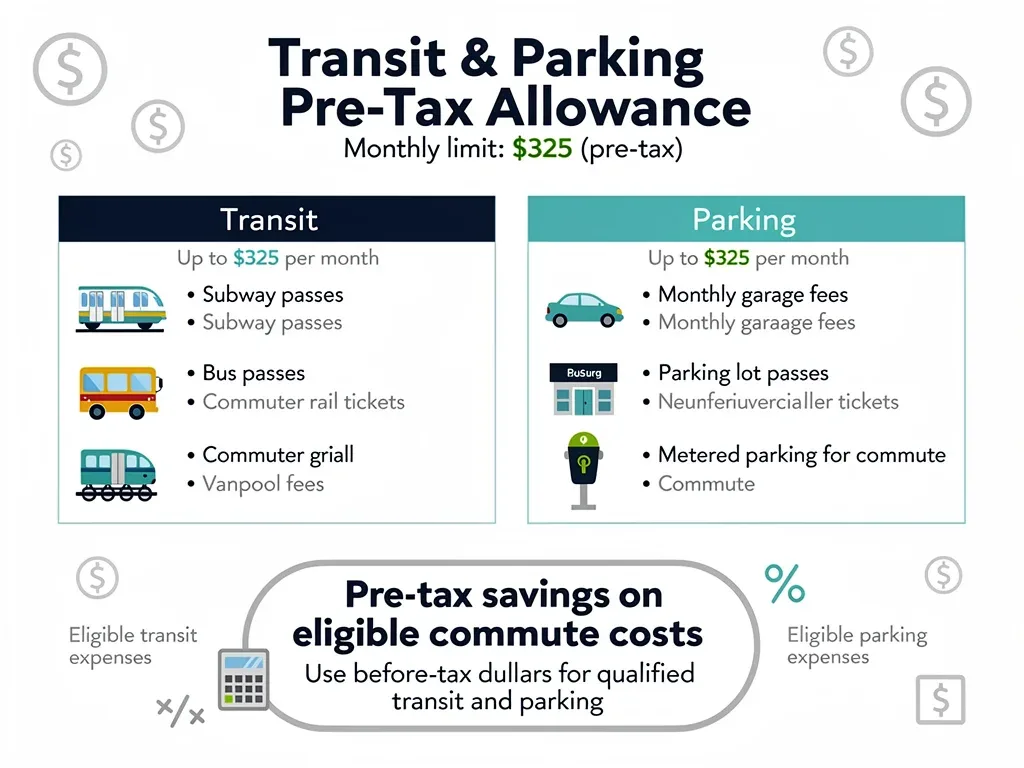
Eligible transit expenses can include fares for qualifying mass transit such as buses, subways, trains and ferries.
Qualified parking can include eligible parking at or near the workplace or a location used to access public transportation.
Some vanpool or transportation arrangements may qualify when applicable requirements are met.
Employer Responsibilities and Program Administration
Administering commuter fringe benefits in 2026 requires employers to maintain clear procedures for employee elections, deductions and reimbursement or payment of eligible expenses.
Benefit systems should reflect the applicable monthly limit and provide employees with clear information about enrollment, eligible transportation and account usage.
Employers may manage these programs internally or work with specialized administrators to simplify deductions, benefit distribution and ongoing plan management.
Navigating Compliance and Reporting
Compliance is an important part of administering commuter fringe benefits in 2026, especially when payroll deductions and employee benefit elections are involved.
Employers should maintain accurate records and ensure that benefits are used only for expenses that qualify under the applicable program rules.
Regular reviews of plan administration can help companies identify inconsistencies, update documentation and communicate relevant changes to participating employees.
Update benefit documents to reflect the applicable monthly limit.
Clearly communicate enrollment procedures and eligible expenses.
Review administrative processes regularly to maintain accurate records.
Maximizing Employee Savings through Strategic Choices
Employees can make better use of commuter fringe benefits in 2026 by estimating transportation expenses before choosing their monthly contribution amount.
Workers who regularly use public transportation or qualified parking may benefit most when their elections closely match the amount they expect to spend each month.
Reviewing balances and commuting habits periodically can also help prevent employees from contributing considerably more or less than their actual eligible expenses.
The Impact on Urban Mobility and Environment
Commuter fringe benefits in 2026 can influence transportation decisions by making certain public transit and shared commuting options more financially attractive.
When more employees choose transit instead of driving alone, increased participation may contribute to lower demand for individual vehicle trips in congested areas.
These benefits can therefore complement broader transportation strategies designed to improve mobility and encourage more efficient commuting alternatives.
Future Outlook and Potential Developments
The rules surrounding commuter fringe benefits in 2026 may continue to evolve as transportation habits, workplace arrangements and public policy priorities change.
Future discussions could address the range of qualifying transportation options or introduce additional adjustments to benefit limits and administrative requirements.
Employees and employers should continue reviewing official guidance and their individual benefit plans whenever changes affecting qualified transportation benefits are announced.
Comparing Commuter Benefits with Other Employee Perks
Commuter fringe benefits in 2026 represent one component of a broader compensation package that may also include health coverage, retirement plans and flexible work arrangements.
For workers facing substantial transportation expenses, commuter benefits can offer practical value because the savings relate directly to recurring costs associated with getting to work.
Employers can improve awareness of the benefit by clearly showing employees how transportation savings fit alongside the other financial and workplace benefits they receive.
Key Point | Brief Description |
|---|---|
$325 Monthly Limit | The pre-tax allowance highlighted for transit and parking expenses under commuter fringe benefits in 2026. |
Pre-Tax Savings | Eligible contributions can reduce taxable income while helping employees cover qualifying commuting expenses. |
Eligible Expenses | Benefits may cover qualifying mass transit fares and eligible parking costs associated with work or transit access. |
Employer Role | Employers administer programs, communicate rules and manage employee elections and deductions. |
Frequently Asked Questions About Commuter Benefits 2026
What are the new limits for commuter fringe benefits in 2026?▼
For 2026, the monthly pre-tax allowance described for qualified transit and parking expenses under commuter fringe benefits in 2026 is $325. Employees should confirm the applicable amount and program conditions with their employer or plan administrator.
How do I maximize my $325 monthly allowance?▼
Estimate your regular eligible transit and parking expenses before choosing your contribution. Review your employer's program rules and adjust your election when permitted if your commuting costs change.
What types of expenses qualify for commuter fringe benefits?▼
Qualified expenses can include eligible mass transit fares, vanpool transportation and parking at or near the workplace or a location used to access transportation. Employees should check their plan administrator's rules for commuter fringe benefits in 2026.
Are bicycle commuting expenses included in the 2026 benefits?▼
The primary categories discussed for commuter fringe benefits in 2026 are qualified transportation and parking. Employees interested in bicycle-related benefits should check current plan rules and applicable official guidance.
What is the employer's role in administering commuter benefits?▼
Employers establish and administer benefit programs, manage eligible pre-tax deductions and communicate plan conditions to employees. Some organizations use third-party administrators to manage commuter fringe benefits in 2026.
Looking Ahead
Commuter fringe benefits in 2026 can provide meaningful savings for employees who regularly spend money on eligible transit or parking expenses.
Making effective use of the benefit requires accurate expense estimates, awareness of qualifying costs and an understanding of how the employer's specific program operates.
Employees and employers should continue monitoring official guidance and plan communications so they can respond appropriately to future changes in transportation benefit rules.